
Sleep is not just “down time” for children—it is the primary window for brain development and physical growth. According to the American Academy of Pediatrics (AAP), sleep deprivation in children affects cognitive performance, emotional regulation, and physical health.
Sleep Requirements by Age (Based on AAP Guidelines)
Below is the detailed breakdown of recommended sleep hours (including naps) for a 24-hour period. These figures are endorsed by the Sleep Foundation and the American Academy of Sleep Medicine.
| Age Group | Recommended Sleep | Developmental Stage |
|---|---|---|
| Newborns (0–3 months) | 14–17 hours | Rapid brain growth, fragmented sleep cycles |
| Infants (4–11 months) | 12–15 hours | Circadian rhythm begins to stabilize |
| Toddlers (1–2 years) | 11–14 hours | Transition to one nap; highly active period |
| Preschoolers (3–5 years) | 10–13 hours | Imagination peaks; nightmares may occur |
| School Age (6–13 years) | 9–11 hours | Critical for academic focus and social skills |
| Teenagers (14–17 years) | 8–10 hours | Circadian shift (staying up late); academic pressure |
Why Is Sleep So Critical for Development?
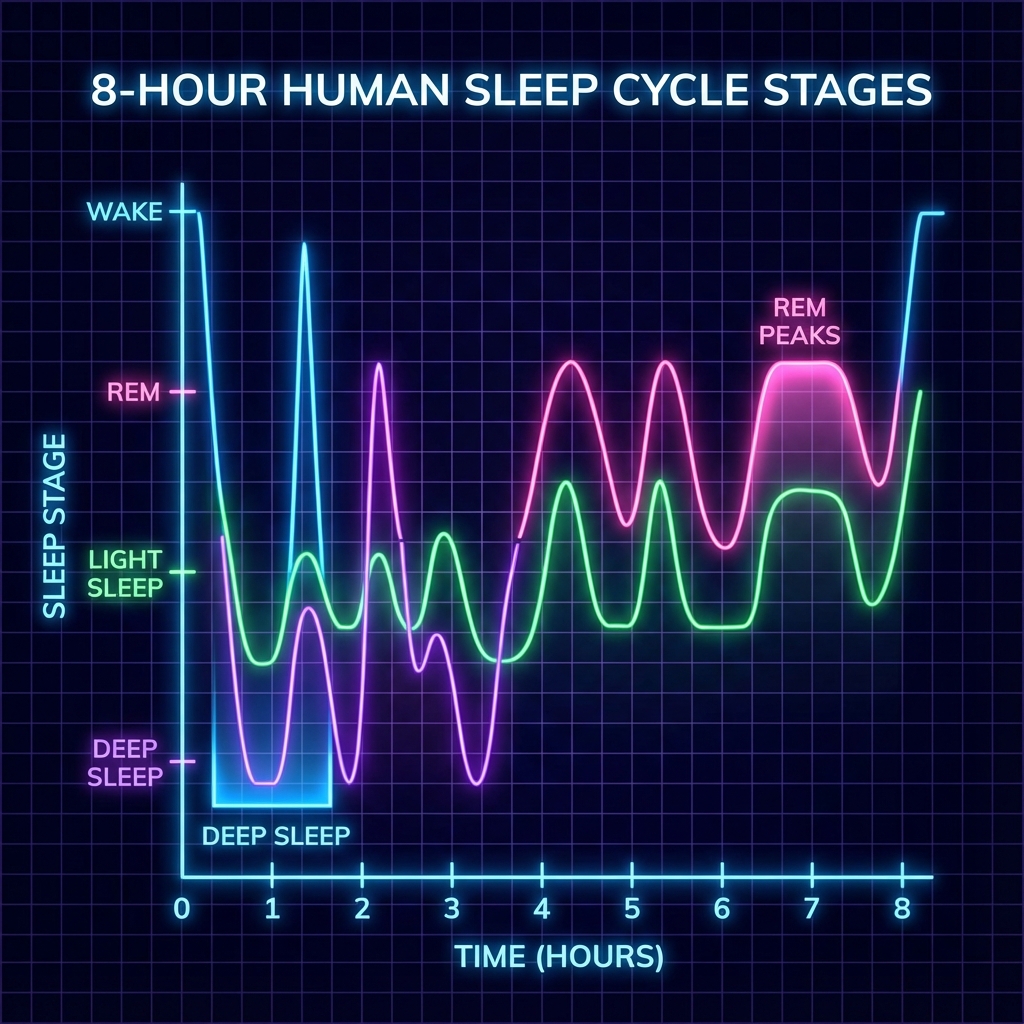
During deep sleep, the pituitary gland releases the majority of Growth Hormone (GH). A study published in the Journal of Pediatrics confirms that children with irregular sleep schedules show slower growth rates and higher cortisol levels.
“Sleep is the single most effective performance enhancer we have for our children’s brains and bodies.”
— Dr. Matthew Walker, Author of *Why We Sleep*
3 Scientific Tips for Better Child Sleep
- The “Blue Light” Ban: Avoid screens 1 hour before bed. Melatonin production in children is suppressed by light twice as much as in adults.
- Consistent Wake Times: A study in Sleep Medicine Reviews suggests that a consistent wake-up time anchors the circadian rhythm more effectively than a strict bedtime.
- Temperature Control: Keep the bedroom cool (around 65-70°F or 18-21°C) to facilitate the drop in core body temperature necessary for deep sleep initiation.
For more advice on creating the perfect environment, read our guide on Creating the Perfect Sleep Sanctuary.