

⚡ Quick Summary
- The Core Issue: Understanding the fundamentals is key to fixing sleep.
- The Solution: Applied science and consistency outperform expensive gadgets.
- Bottom Line: Read below for the detailed breakdown.
Key Takeaways
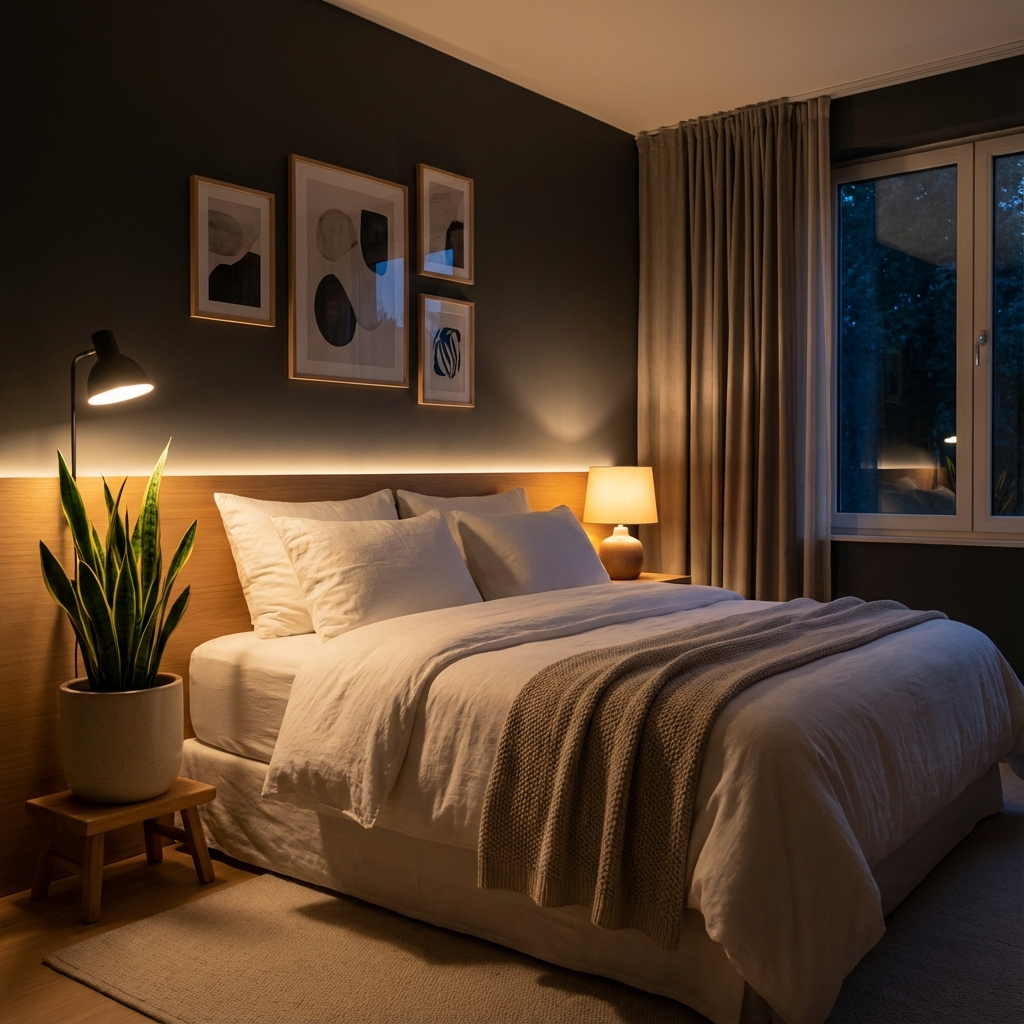
- Summary: Transform your bedroom into a sleep sanctuary. Learn how temperature, plants, and removing distractions can drastically improve your night.
- Action: Read below for the full scientific breakdown.
Your bedroom environment is one of the most significant factors in sleep quality. This guide covers how to optimize light, sound, temperature, and air quality.
1. Optimal Temperature
Science suggests the ideal temperature for sleep is around 65°F (18.3°C). A cooler room mimics the body’s natural temperature drop that occurs at night.
💡 Pro Tip: The 90-Minute Rule
Sleep cycles last approximately 90 minutes. If you need to set an alarm, calculate backwards in 90-minute increments (e.g., 7.5 hours or 9 hours) to wake up at the end of a cycle, not during deep sleep. This prevents grogginess.
2. Air Quality and Nature
Stale air can lead to restless sleep. Ensure proper ventilation or consider using air purifiers. Adding nature helps too; specifically, Sleep-Inducing Plants like Snake Plant can improve overnight oxygen levels.
3. Eliminating Distractions
Remove heavy electronics. If you suffer from anxiety, consider using tools like weighted blankets which use <a href="http:/top-5-weighted-blankets-for-anxiety-and-stress-relief-2025-Review/”>Deep Pressure Stimulation to calm the nervous system.
Final Thoughts
Improving your sleep is a journey. Start with one small change from this guide and monitor how you feel over the next week.
Common Mistakes to Avoid
One of the biggest errors people make is inconsistency. Your body thrives on routine. Trying this method once will not yield results; it requires at least two weeks of dedication to reset your biological habits.
Additionally, pay attention to your environment. No amount of technique can overcome a room that is too hot, too bright, or too noisy.
Step-by-Step Implementation
1. Start Small: Do not try to overhaul your routine in one night.
2. Track Progress: Use a journal to note how you feel each morning.
3. Adjust: If you do not see results in 7 days, tweak one variable at a time (light, temperature, or timing).
Expert Tip
Most people fail because they give up too soon. Neural pathways take time to adapt to new sleep associations. Consistency is your most powerful tool.