
⚡ Quick Summary
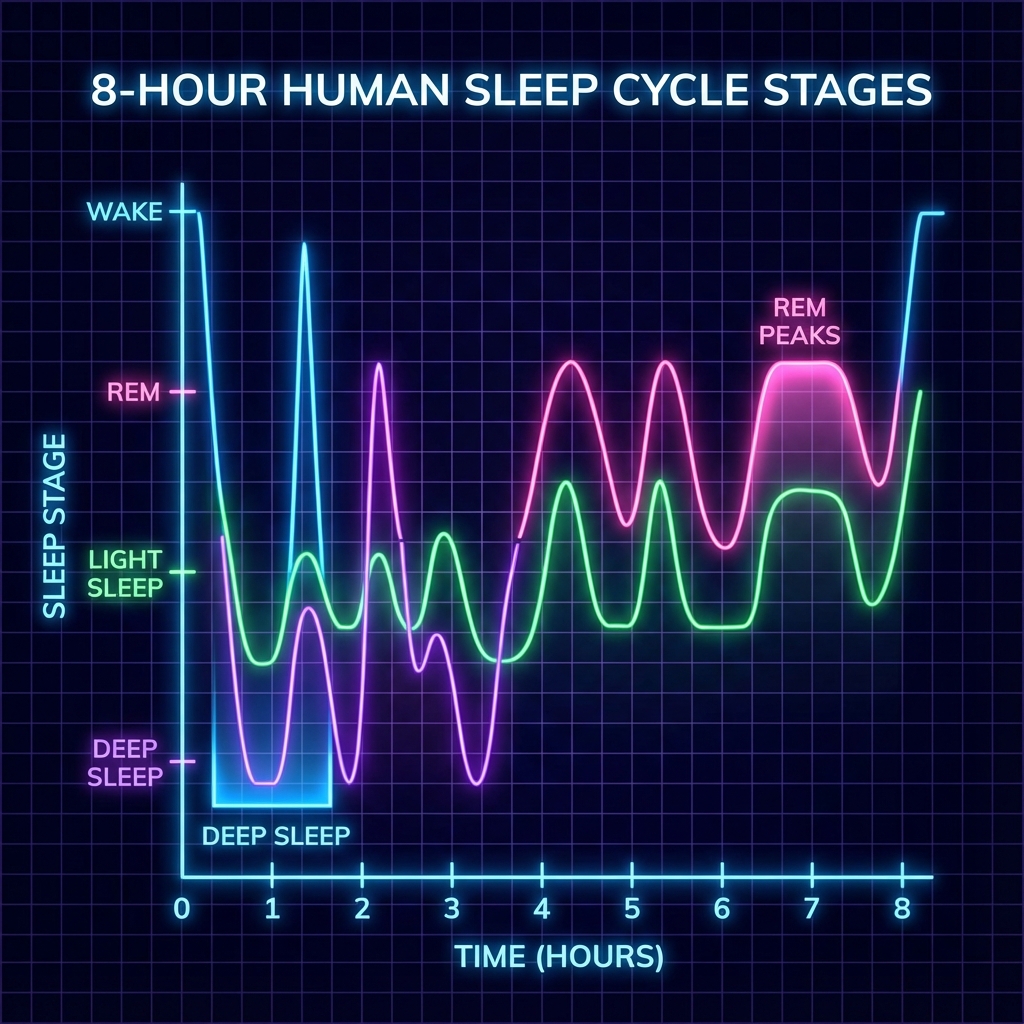
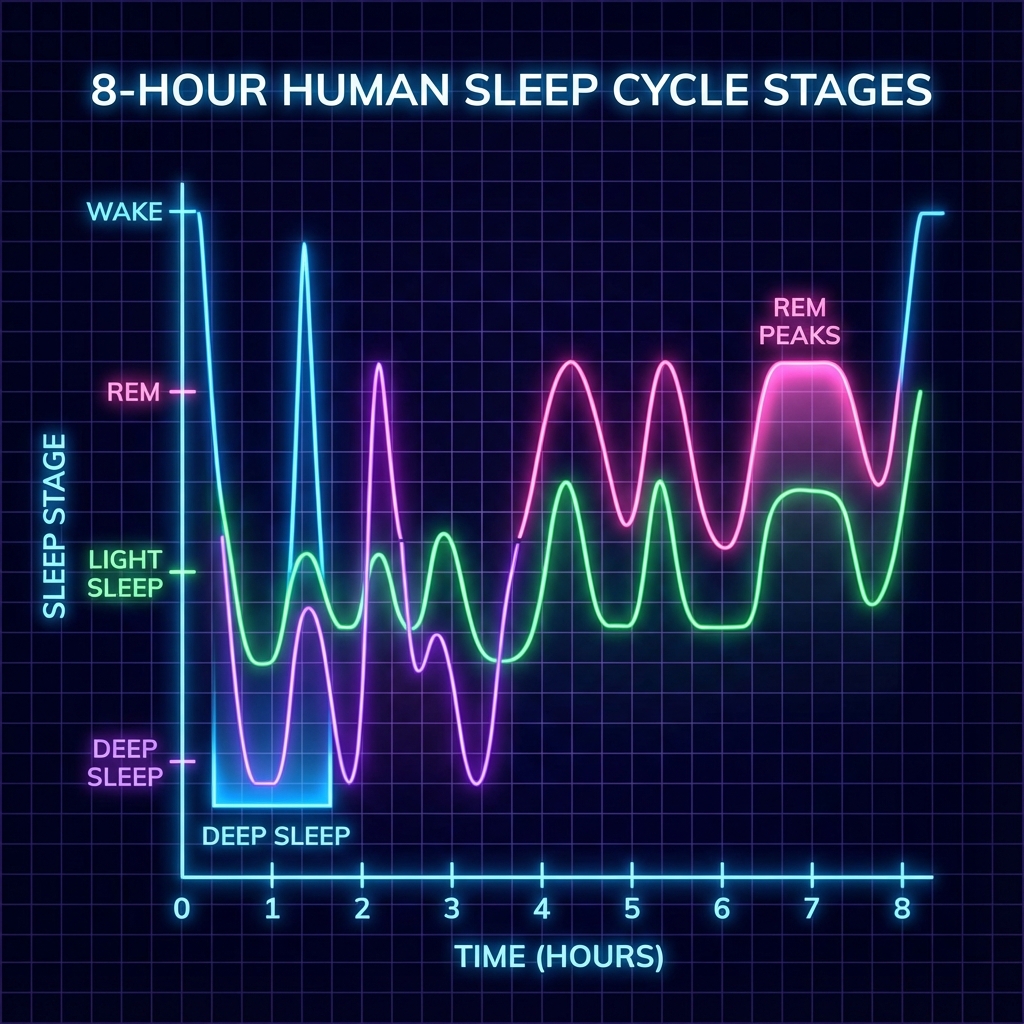
- The Concept: Sleep isn’t a flat line; it’s a roller coaster of 4 distinct stages.
- The Problem: Missing the “Deep Sleep” window in the first 4 hours ruins physical recovery.
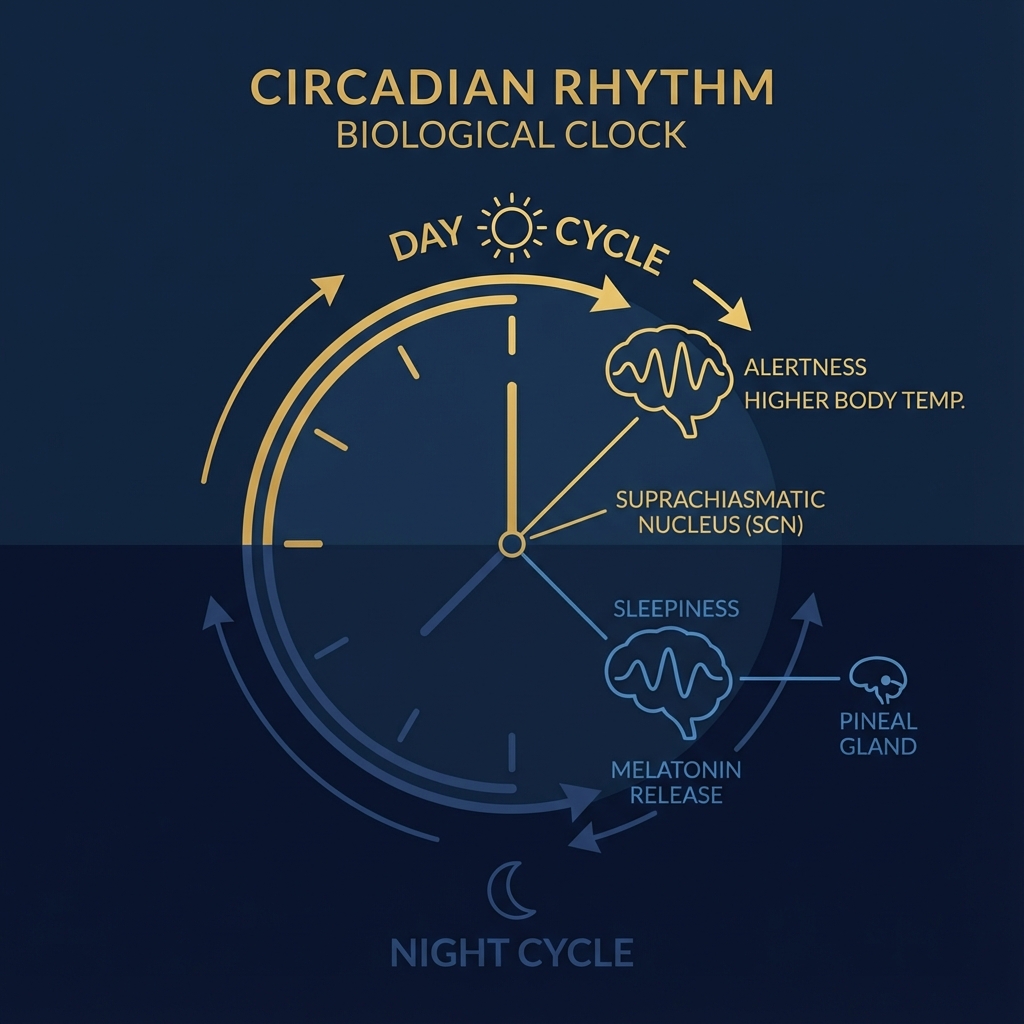
- The Fix: Timing your bed time to sync with melatonin release is more critical than sleep duration.
The 4 Stages of Sleep: A Biological Roadmap
Your brain cycles through these stages approximately every 90 minutes. Understanding this cycle is the key to waking up refreshed.Stage 1: The Drift (NREM 1)
This is the bridge between wakefulness and sleep. Depending on your Adenosine levels, this lasts 5-10 minutes. It’s light sleep where muscle twitching (hypnic jerks) is common.🧬 Science Spotlight
A 2023 study published in the Journal of Sleep Research found that consistency in wake-up times is 3x more effective for energy levels than sleep duration alone. Your brain craves predictability over quantity.
Stage 2: Light Sleep (NREM 2)
You spend ~50% of your night here. Your body temperature drops and heart rate slows. This is where memory consolidation begins.Stage 3: Deep Sleep (NREM 3)
This is the “Money Stage”. Also known as Slow Wave Sleep (SWS). This is when:- Human Growth Hormone (HGH) is released.
- Physical tissues are repaired.
- The brain detoxifies itself via the Glymphatic system.
REM Sleep (Rapid Eye Movement)
The final stage involves intense brain activity. This is essential for emotional processing and creativity. If you skip REM, you wake up feeling mentally foggy and irritable.How to Optimize Your Architectre
You cannot force your brain into a stage, but you can create the conditions for it. 1. The Temperature Trigger: Your core body temperature must drop by 2-3°F to initiate Deep Sleep. Keep your bedroom at 65°F (18°C). 2. Avoid the <a href="/sleep-problems/why-preventing-blue-light-is-critical-for-Insomnia-relief/”>Blue Light Block: Blue light suppresses melatonin, pushing back your REM onset.What is a normal sleep architecture profile?
A healthy adult typically spends 5% in Stage 1, 50% in Stage 2, 20-25% in Deep Sleep, and 25% in REM.
Can I catch up on lost Deep Sleep?
Partially. The body will prioritize Deep Sleep (“REM rebound”) if deprived, but chronic loss leads to long-term health deficits.
does alcohol help sleep architecture?
No. Alcohol acts as a sedative, helping you reach Stage 1 faster, but it significantly fragments REM sleep, leading to poor quality rest.
Final Thoughts
Improving your sleep quality is a journey, not a sprint. By implementing the insights from this guide on Sleep Architecture Decoded: Why You Feel Tired Despite “8 Hours”, you are taking a crucial step towards better health. Remember, consistency is key. Sweet dreams.📚 Read More in This Series
🗣️ Readers’ Discussion: Have you tried this method? Or do you have a different trick? Leave a comment below—we read every single one.