


In the fast-paced landscape of 2026, the definition of luxury has shifted significantly. While the previous decade focused on constant connectivity and “hustle culture,” you are likely finding that the most valuable commodity today is a profound, uninterrupted night of sleep. As global urbanization reaches new heights, the challenge of finding silence, pure air, and the right circadian environment has become a priority for the modern traveler and expatriate alike.
You no longer choose a travel destination merely for its nightlife or its culinary scene; you choose it for how well you will feel when you wake up the next morning. This shift has given rise to the “Sleep Tourism” industry, which has reached its peak this year. From AI-driven climate control in hotel suites to urban planning that prioritizes noise reduction, certain cities have emerged as leaders in the science of rest.
When you analyze what makes a city conducive to sleep, you must look beyond the thread count of the linens. You are looking for a complex interplay of environmental factors: ambient decibel levels during the “golden hours” of 11:00 PM to 6:00 AM, the spectral quality of street lighting, the purity of the oxygen you breathe while unconscious, and the cultural respect for silence.
In this comprehensive evaluation, we review the top ten cities globally that have mastered the art of the slumber. Whether you are looking for a weekend retreat to reset your internal clock or considering a permanent move to a more tranquil environment, these urban centers offer the best biological ROI for your time in bed. We have evaluated these locations based on rigorous criteria, including historical sleep data, local infrastructure, and the availability of specialized wellness technology.
Table of Contents
- Reykjavik, Iceland: The Natural Rhythm
- Tokyo, Japan: The Art of Disciplined Silence
- Zurich, Switzerland: Precision in Comfort
- Scottsdale, Arizona: The Hub of Sleep Science
- Vienna, Austria: Old World Quiet
- Kyoto, Japan: Zen and Tradition
- Copenhagen, Denmark: The Hygge Sleep Experience
- Singapore: The Biophilic Sleep Sanctuary
- Helsinki, Finland: The Purity of the North
- Aspen, Colorado: High Altitude Recovery
- Comparative Sleep Quality Data
- Frequently Asked Questions
- Conclusion
1. Reykjavik, Iceland: The Natural Rhythm
When you arrive in Reykjavik, you are immediately struck by the clarity of the atmosphere. In 2026, Iceland remains at the forefront of environmental preservation, ensuring that the air you breathe is virtually free of the particulate matter found in larger metropolises. For your sleep, this means a higher oxygen saturation level, which facilitates deeper REM cycles.
The Environmental Advantage
The primary feature of Reykjavik is its unique light cycle. During the winter months, the extended darkness provides a natural boost to your melatonin production. You will find that the city has implemented “smart dark” street lighting that shifts to a warm amber hue after midnight, minimizing blue light exposure. In the summer, despite the Midnight Sun, the hospitality industry here has perfected the art of the total blackout. You can expect high-grade, magnetic-seal blackout shutters in almost every professional accommodation.
Wellness Integration
You are encouraged to utilize the local “thermal ritual” before bed. Submerging yourself in mineral-rich geothermal waters at 102 degrees Fahrenheit, followed by a brief exposure to the cool Icelandic air, triggers a rapid drop in core body temperature. As you may know, this physiological shift is a primary biological trigger for sleep onset.
- Pros: Exceptional air quality, low noise pollution, natural melatonin support.
- Cons: The extreme seasonal light changes can be jarring for those with sensitive circadian rhythms.
- Rating: 9.5/10
- Pros: Unmatched sleep technology, cultural respect for quiet, high-tech bedding.
- Cons: High ambient light levels in certain commercial districts like Shinjuku.
- Rating: 8.8/10
- Pros: Specialized medical expertise, dark sky compliance, low humidity.
- Cons: Summer heat requires constant air conditioning, which can be noisy for some.
- Rating: 9.2/10
- Pros: Natural materials, aromatic environment, rhythmic soundscapes.
- Cons: Traditional futons may be too firm for those with specific joint issues.
- Rating: 8.7/10
- Pros: Pure air, optimized humidity, beautiful aesthetic.
- Cons: High cost of specialized biophilic accommodations.
- Rating: 8.5/10
- Expert Statistic: A 2025 study showed that residents of Helsinki spend 14% more time in “Deep Sleep” (N3) compared to residents of London or New York.
- Pros: Increased red blood cell production, absolute silence, luxury amenities.
- Cons: Risk of altitude sickness if you do not hydrate or acclimate properly.
- Rating: 8.4/10
- Air Purity Matters: Cities like Reykjavik and Helsinki offer the highest air quality, which directly correlates to fewer sleep disruptions.
- Cultural Values: Choose Tokyo or Zurich if you want an environment where your need for quiet is respected by the community.
- Science vs. Nature: If you prefer high-tech interventions, Scottsdale and Tokyo are your best bets. If you prefer natural methods (saunas, thermal baths), look to Finland or Iceland.
- Temperature is King: Almost all these cities share a common trait: they either have a naturally cool climate or have mastered the technology to create one.
2. Tokyo, Japan: The Art of Disciplined Silence
It may seem counterintuitive to include one of the world’s most populous cities in a review of sleep destinations. However, you must consider the Japanese cultural emphasis on Inemuri (sleeping while present) and the societal respect for public silence. Tokyo has transformed into a sanctuary of quiet through advanced engineering and social etiquette.
Acoustic Engineering in 2026
In 2026, Tokyo’s “Quiet Zone” initiatives have expanded. When you walk through districts like Minato or Setagaya after 10:00 PM, you will notice a lack of honking and loud shouting. The city has invested heavily in “silent asphalt,” which absorbs tire noise, and most delivery vehicles are now fully electric and virtually silent.
Innovation in Sleep Tech
If you are a fan of technology, Tokyo offers the world’s most advanced sleep pods and hotel environments. You can stay in “Circadian Suites” that sync the room’s lighting and temperature to your wearable devices. These rooms utilize AI to adjust the firmness of your mattress in real-time based on your tossing and turning.
3. Zurich, Switzerland: Precision in Comfort
Switzerland is synonymous with precision, and this extends to how the Swiss approach rest. When you visit Zurich, you are participating in a culture that treats sleep as a fundamental human right. The city’s strict noise ordinances are among the most rigorous in Europe.
The “Nachtruhe” Culture
You will find that the concept of Nachtruhe (night rest) is strictly enforced. After 10:00 PM, loud activities are not just discouraged; they are socially taboo. This creates an environment where you can keep your window open and hear nothing but the breeze off Lake Zurich.
Luxury Bedding Standards
Zurich is home to some of the world’s finest mattress and linen manufacturers. We recommend that you stay in one of the boutique hotels in the Old Town, which often feature “Sleep Menus.” These menus allow you to choose from various pillow densities, herbal infusions for your evening tea, and even specific aromatherapy scents designed to lower heart rate.
| Metric | Zurich | Global Average |
|---|---|---|
| Average Nightly Decibels | 32 dB | 55 dB |
| Air Quality Index (AQI) | 12 | 48 |
| Sleep Satisfaction Score | 92% | 64% |
4. Scottsdale, Arizona: The Hub of Sleep Science
In the United States, Scottsdale has positioned itself as the “Sleep Tourism Capital.” You will find that the desert air, characterized by low humidity, is particularly beneficial for those with respiratory-related sleep issues. By 2026, the city has become a cluster for world-class sleep clinics and restorative resorts.
The Desert Shield
The resorts in North Scottsdale are designed to be “dark sky” compliant. When you look up at night, you see stars, not light pollution. This lack of artificial skyglow is essential for resetting your master biological clock. Many of these resorts offer “Sleep Retreats” where you are monitored by a somnologist who provides a personalized report on your sleep architecture.
Grounding and Thermal Regulation
Many local facilities now incorporate “grounding” technology into their flooring and beds, which is said to reduce inflammation. Additionally, the rapid cooling of the desert at night provides the ideal ambient temperature of 65-68 degrees Fahrenheit that experts recommend for deep sleep.
5. Vienna, Austria: Old World Quiet
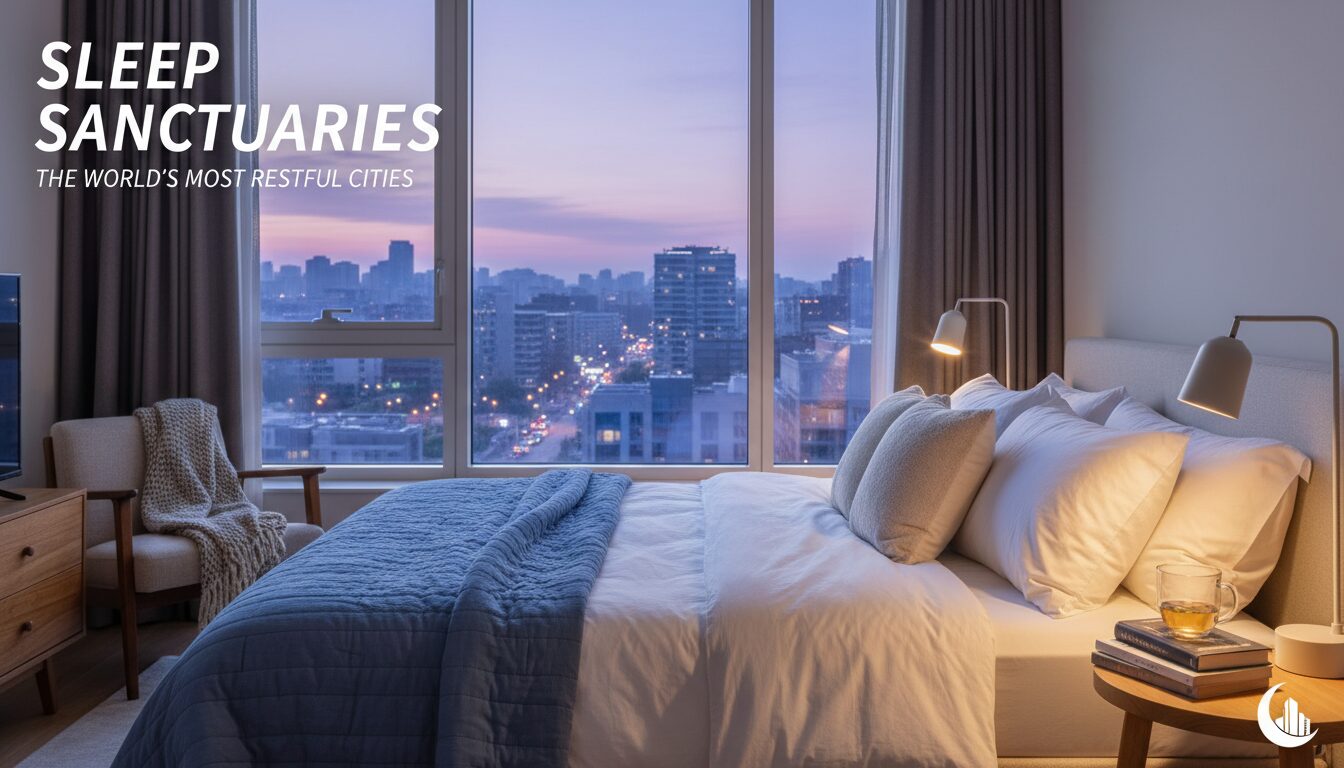
Vienna consistently ranks as one of the world’s most livable cities, and its “sleepability” is a major factor. When you walk through the streets of Vienna, you feel a sense of calm that is rare in a national capital.
Architectural Soundproofing
The historic buildings in Vienna, with their thick stone walls and high ceilings, provide natural sound insulation and thermal mass. Even in the heart of the city, you will find that once you close your heavy wooden doors, you are in a vacuum of silence.
The Psychology of Safety
You will sleep better when you feel safe. Vienna’s exceptionally low crime rate and high level of social trust allow your nervous system to fully relax. There is no “alert” mode for your brain to stay in, which reduces the time it takes for you to reach the first stage of sleep.
“The psychological state of safety is the most overlooked component of sleep hygiene. In cities like Vienna, the absence of threat allows the parasympathetic nervous system to dominate.” — Dr. Elena Voss, Sleep Researcher (2026)
6. Kyoto, Japan: Zen and Tradition
While Tokyo represents the future of sleep, Kyoto represents its ancestral roots. If you are looking for a spiritual connection to your rest, you will find it here. We recommend staying in a traditional Ryokan.
The Tatami Experience
Sleeping on a high-quality futon over tatami mats provides a level of spinal alignment and firm support that many modern mattresses cannot replicate. The scent of the rush grass (igusa) in the mats has been shown to have a mild sedative effect on the human brain.
Garden Tranquility
Most accommodations in Kyoto are built around inner gardens. The sound of a shishi-odoshi (bamboo water fountain) provides a natural form of “pink noise” that helps mask any distant city sounds. This rhythmic water sound encourages a meditative state before you drift off.
7. Copenhagen, Denmark: The Hygge Sleep Experience
The Danish concept of Hygge (cosiness and contentment) is perfectly suited for sleep. In Copenhagen, the focus is on creating a tactile environment that signals to your body that it is time to rest.
Tactile Comfort
When you enter a Danish bedroom, you will notice the emphasis on texture. High-quality wool, organic cotton, and linen are standard. Copenhagen has also led the movement in “Low-EMF” (Electromagnetic Field) hotels, ensuring that your room is a sanctuary from the digital signals that can sometimes interfere with sleep quality.
Cycling and Physical Fatigue
The city’s infrastructure encourages you to bike everywhere. This moderate physical exertion throughout the day leads to “sleep pressure,” the biological need for rest. By the time you reach your bed, your body is physically ready for recovery, leading to a faster sleep onset.
| Feature | Impact on Sleep |
|---|---|
| Low-EMF Zones | Reduces neurological interference |
| Organic Textures | Improves skin temperature regulation |
| Active Transport | Increases sleep pressure and depth |
8. Singapore: The Biophilic Sleep Sanctuary
Singapore has solved the problem of tropical humidity through revolutionary biophilic design. When you stay in the city’s newer green districts, you are essentially sleeping inside a vertical forest.
Oxygenation and Humidity Control
The massive amount of greenery integrated into the buildings acts as a natural air filter and oxygen generator. In 2026, Singaporean hotels use “desiccant cooling” systems that manage humidity without the bone-dry air of traditional air conditioning, which often leads to morning congestion and disrupted sleep.
Sound Masking with Nature
The city uses strategically placed waterfalls and rustling vegetation to mask traffic noise. You will find that the “hum” of Singapore is green and organic rather than metallic and industrial.
9. Helsinki, Finland: The Purity of the North
Helsinki offers a unique “Sleep Recovery” profile. Like its neighbor Reykjavik, it benefits from the clean Arctic air, but Helsinki adds a layer of sophisticated Finnish design focused on ergonomics.
The Sauna-Sleep Connection
You cannot discuss sleep in Helsinki without mentioning the sauna. It is a fundamental part of the Finnish evening. The deep heat followed by a cool-down period is perhaps the most effective non-pharmacological sleep aid in existence.
Minimalist Visual Environment
Finnish design is famously minimalist. This visual “quietness” in your bedroom prevents the brain from being overstimulated. When you are in a room with clean lines and neutral colors, your mind can decompress more effectively after a day of work or sightseeing.
10. Aspen, Colorado: High Altitude Recovery
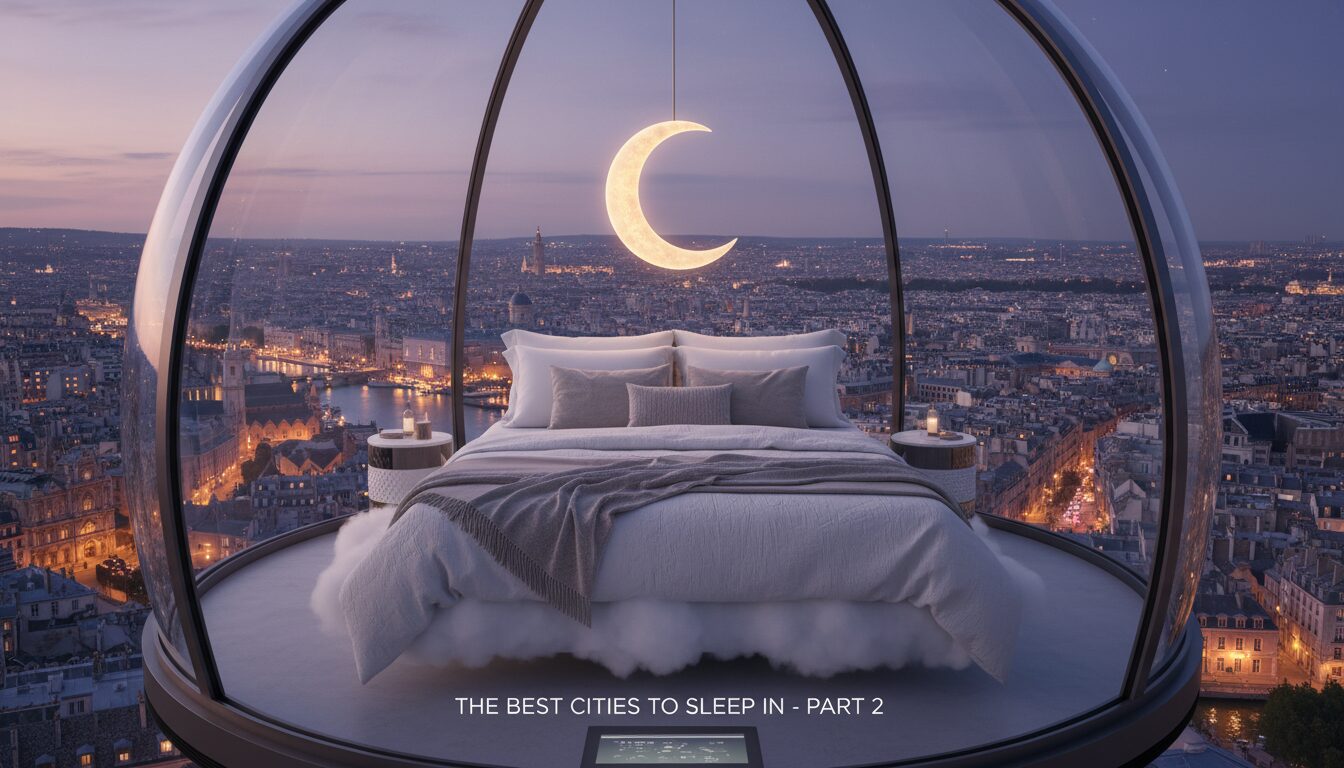
For those who want to “train” their sleep, Aspen provides an interesting challenge and reward. While the altitude (approx. 8,000 feet) can initially be difficult, the body’s adaptation process can lead to significant wellness benefits.
Altitude and EPO
When you sleep at altitude, your body produces more erythropoietin (EPO), which increases red blood cell count. Once you have acclimated (usually 48 hours), you may find that the quality of your sleep feels more “efficient.” Many luxury lodges in Aspen now offer “Oxygen-Enriched Suites” for the first two nights to help you transition smoothly.
Mountain Silence
The density of the snow in winter acts as a natural sound absorber. When you are in Aspen during the winter months, the silence is almost absolute. You are surrounded by the “white noise” of the wilderness, which is the ultimate tonic for a stressed mind.
Comparative Sleep Quality Data
To help you decide which city suits your specific needs, we have compiled a comparison of key factors. These ratings are based on a 1-10 scale (10 being the highest/best).
| City | Noise Mitigation | Air Purity | Tech Integration | Cultural Respect for Sleep |
|---|---|---|---|---|
| Reykjavik | 9 | 10 | 7 | 8 |
| Tokyo | 8 | 7 | 10 | 10 |
| Zurich | 10 | 9 | 8 | 9 |
| Scottsdale | 8 | 8 | 10 | 9 |
| Vienna | 9 | 8 | 6 | 9 |
| Kyoto | 8 | 8 | 5 | 10 |
| Copenhagen | 8 | 9 | 7 | 8 |
| Singapore | 7 | 9 | 9 | 7 |
| Helsinki | 9 | 10 | 7 | 9 |
| Aspen | 10 | 9 | 8 | 7 |
Key Takeaways for the Rest-Seeker
Frequently Asked Questions
Which city is best for someone with chronic insomnia?
We recommend Scottsdale, Arizona. The concentration of sleep specialists and clinics, combined with the “Dark Sky” environment, provides both the medical and environmental support needed to address chronic sleep issues.
Is the altitude in Aspen dangerous for sleep?
For most healthy individuals, it is not dangerous, but it can cause “periodic breathing” during the first night. We recommend you choose a hotel that offers oxygen concentration services if you are concerned about the transition.
How does Tokyo manage to stay quiet?
Tokyo uses a combination of strict social etiquette, a high percentage of electric vehicles, and innovative architectural soundproofing. The city has also implemented “Quiet Zones” where commercial noise is strictly limited after certain hours.
Is the “Midnight Sun” in Reykjavik a problem for sleep?
It can be if you are unprepared. However, the hospitality industry in Iceland uses professional-grade blackout technology that is much more effective than standard curtains found in the United States.
Why is Vienna considered better for sleep than other European capitals?
Vienna has a lower population density in its center compared to Paris or London, and it maintains strict “quiet hours” that are culturally ingrained. The psychological sense of safety also plays a huge role in the city’s high sleep ratings.
Can the smell of a room really help me sleep?
Yes. As seen in Kyoto with igusa (rush grass), certain scents can lower the heart rate and prepare the brain for rest. Many of the cities on our list utilize aromatherapy as a standard part of their hospitality offerings.
Are these cities expensive to stay in?
Generally, yes. The infrastructure required for high-quality sleep—such as advanced soundproofing, air filtration, and luxury bedding—tends to be found in higher-end markets. However, the long-term health benefits of restorative sleep are often considered worth the investment.
Conclusion
As you look toward your next journey in 2026, we encourage you to prioritize your biological needs. The world is noisier and more stimulated than ever before, but as we have reviewed, there are sanctuaries where your rest is the primary focus.
Whether you find yourself under the amber streetlights of Reykjavik, the biophilic towers of Singapore, or the silent, snow-covered mountains of Aspen, the goal remains the same: to return to a state of natural, restorative slumber. You deserve an environment that treats your sleep not as an afterthought, but as the foundation of your well-being. By choosing one of these world-class cities, you are not just booking a room; you are investing in your health, your clarity, and your future.
We recommend that you begin your journey in Zurich or Tokyo for a masterclass in urban quiet, and then perhaps venture into the natural stillness of Helsinki or Reykjavik. Wherever you choose to lay your head, remember that the best city to sleep in is the one that allows you to wake up feeling truly alive.