

As we navigate the mid-2020s, the landscape of parenting has shifted significantly. With the rise of integrated smart home environments and a deeper understanding of pediatric neurobiology, we are better equipped than ever to support our children’s development. However, one fundamental pillar remains as critical today in 2026 as it was decades ago: restorative sleep. For children aged 3 to 5, sleep is not merely a period of inactivity; it is a high-octane biological process that fuels cognitive growth, emotional regulation, and physical health.
The preschool years represent a massive developmental bridge. During this window, children transition from the high-dependency sleep patterns of toddlerhood toward the more consolidated rest of school-aged children. It is a period marked by vivid imaginations, the assertion of independence, and the often-dreaded “nap transition.” Parents in 2026 face unique challenges, from managing digital exposure in an increasingly connected world to balancing busy family schedules that often push bedtimes later than biological norms suggest.
Understanding the nuances of the 3-to-5-year-old sleep cycle requires a blend of science and intuition. At this age, the brain is undergoing a pruning process, refining neural pathways that will dictate a child’s ability to focus, empathize, and learn for years to come. Lack of sleep doesn’t just result in a cranky afternoon; it can lead to long-term behavioral hurdles and executive functioning delays. This comprehensive guide is designed to provide parents, caregivers, and educators with the most current, evidence-based strategies for ensuring that every child in this age bracket gets the rest they need to thrive in our modern world.
Table of Contents
- The Biology of the Preschool Brain: Why Sleep Matters More Than Ever
- Recommended Sleep Durations and the 2026 Standards
- The Great Nap Transition: Navigating the Shift to Quiet Time
- Crafting the Perfect 2026 Sleep Sanctuary
- The Anatomy of a Bulletproof Bedtime Routine
- Managing Night Terrors, Nightmares, and Bedtime Fears
- Nutrition and Hydration: The Hidden Sleep Saboteurs
- Digital Wellness and the Preschooler: Managing Blue Light and Stimulation
- Gentle Sleep Coaching for the Assertive Preschooler
- When to Seek Professional Help: Recognizing Sleep Disorders
- Frequently Asked Questions (FAQ)
- Key Takeaways
- They play happily in their crib or bed throughout the entire nap time.
- They do not have a meltdown in the late afternoon on days they don’t nap.
- Bedtime becomes a struggle, taking 60 minutes or more for them to fall asleep.
- They are consistently waking up very early (before 6:00 AM) when they nap during the day.
- Bathing: A warm bath lowers the body’s core temperature afterward, which is a primary signal for sleep.
- Brushing: Hygiene rituals provide a sense of order and predictability.
- Books: Reading together fosters bonding and builds vocabulary. In 2026, we recommend physical books or e-ink readers over tablets to avoid backlight.
- Bed/Bonding: A final “low-light” conversation about the best part of their day helps process emotions and reduces anxiety.
- Whole grain toast with almond butter: Provides steady energy and magnesium.
- Greek yogurt with a few cherries: Cherries are one of the few natural food sources of melatonin.
- Banana: Contains potassium and vitamin B6, which help the body produce serotonin.
- Caffeine: Found in some sodas, chocolate, and even some flavored waters.
- Excessive Sugar: Leads to hyperactivity and “the second wind.”
- Large amounts of liquids: To prevent “potty runs” or bedwetting incidents in children who are still mastering nighttime dryness.
1. The Biology of the Preschool Brain: Why Sleep Matters More Than Ever
By the age of three, a child’s brain is twice as active as an adult’s brain. This neuroplasticity is a double-edged sword. While it allows for rapid language acquisition and social learning, it also means the brain requires significant “downtime” to process information and clear out metabolic waste. In 2026, pediatric researchers have placed a renewed emphasis on the role of the glymphatic system—the brain’s waste clearance system—which operates primarily during deep sleep.
For a 4-year-old, sleep is when memories are consolidated. The “Aha!” moment they had while learning to ride a tricycle or identifying a new color is solidified during the REM (Rapid Eye Movement) stages of sleep. Furthermore, growth hormone is predominantly secreted during non-REM deep sleep. If a child’s sleep is chronically interrupted or shortened, their physical growth and immune system resilience can be measurably impacted.
In this stage of life, children are also developing their “internal clock” or circadian rhythm. This biological metronome is sensitive to light, temperature, and routine. When we align a child’s daily schedule with their natural biological drive, we see a marked decrease in “bedtime resistance”—that classic preschooler maneuver to delay sleep at all costs.
2. Recommended Sleep Durations and the 2026 Standards
While every child is an individual, clinical data updated for 2026 continues to support a specific range of sleep hours for the 3-to-5 demographic. The consensus among pediatric sleep experts is that preschoolers need between 10 and 13 hours of total sleep in a 24-hour period.
The distribution of these hours changes as the child moves from age three to five. A younger preschooler may still be taking a 90-minute afternoon nap and sleeping 11 hours at night. By age five, most children have consolidated their sleep into a single 11-to-12-hour block overnight.
| Age | Recommended Total Sleep | Typical Nap Duration | Nighttime Sleep Window |
|---|---|---|---|
| 3 Years | 11 – 13 Hours | 1 – 2 Hours | 7:00 PM – 7:00 AM |
| 4 Years | 10 – 12.5 Hours | 0 – 1.5 Hours | 7:30 PM – 7:00 AM |
| 5 Years | 10 – 12 Hours | Transitioning to Quiet Time | 8:00 PM – 7:00 AM |
The Impact of Sleep Debt
It is a common misconception that if a child misses an hour of sleep one night, they can “make it up” by sleeping in the next morning. In reality, preschoolers who miss their optimal sleep window often become overtired. An overtired preschooler’s body produces cortisol and adrenaline to keep them going, which actually makes it harder for them to fall asleep and stay asleep. This creates a vicious cycle of sleep debt that can take days to resolve.
3. The Great Nap Transition: Navigating the Shift to Quiet Time
One of the most significant milestones in the 3-to-5 age range is the dropping of the afternoon nap. Most children stop napping consistently between the ages of 3.5 and 4.5. However, this transition is rarely a straight line. Many parents find themselves in a “gray zone” where the child is too tired to make it to 7:00 PM without a nap, but if they do nap, they aren’t tired until 10:00 PM.
Signs Your Child is Ready to Drop the Nap:
Implementing “Quiet Time”
Even when the physiological need for a nap vanishes, the need for a midday reset does not. In 2026, the concept of “Restorative Quiet Time” has gained popularity. This involves the child spending 45–60 minutes in their room with low-sensory activities—such as audiobooks, soft building blocks, or coloring—without the expectation of sleep. This practice prevents afternoon burnout and provides parents with a necessary break, maintaining the structure of the day.
4. Crafting the Perfect 2026 Sleep Sanctuary
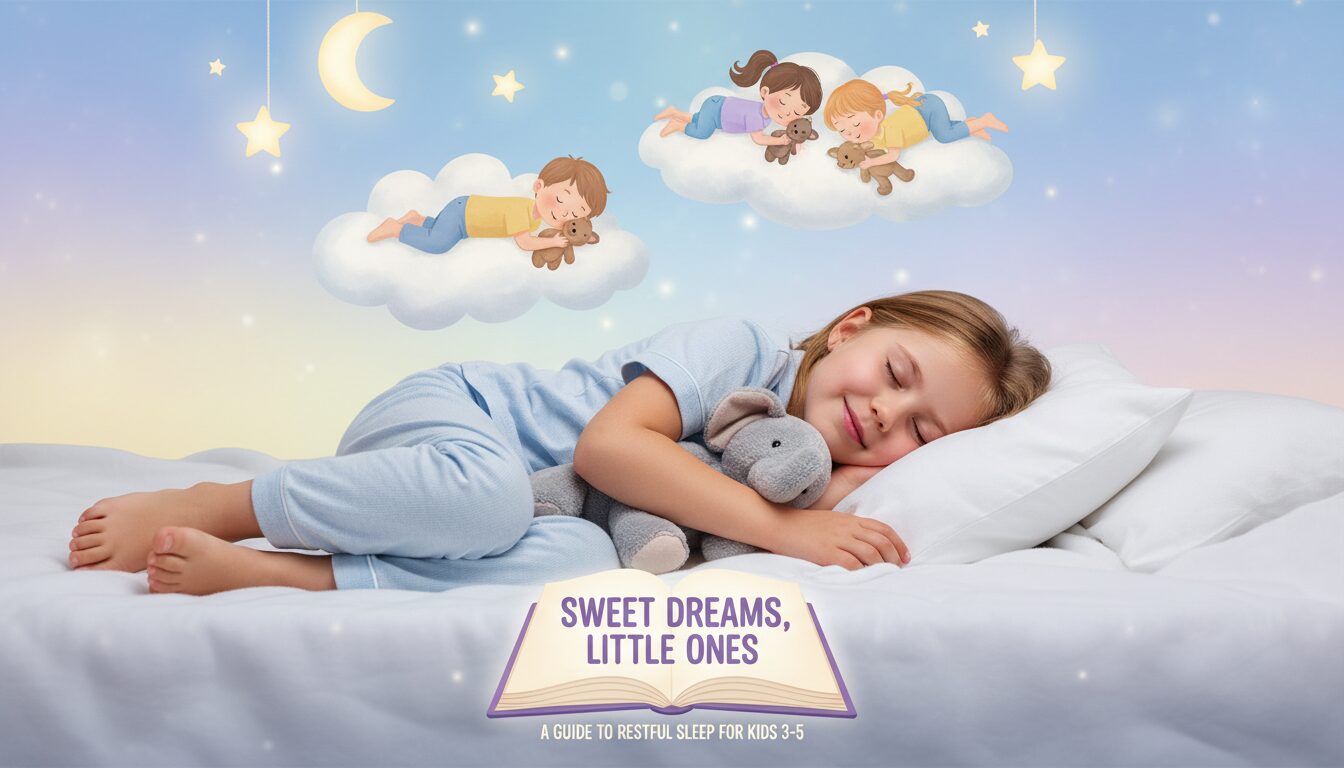
The environment in which a child sleeps is a powerful cue for their brain to power down. With modern 2026 technology, we can optimize the bedroom environment more precisely than ever before.
Temperature and Air Quality
The ideal temperature for a preschooler’s room is between 65°F and 70°F (18°C to 21°C). In 2026, many homes utilize smart thermostats that gradually lower the temperature by 2 degrees an hour before bedtime to mimic the natural cooling of the earth at sunset. Furthermore, air purification has become a standard in the American bedroom, ensuring that allergens and CO2 levels remain low, which has been shown to improve deep sleep cycles.
Lighting: The Red Light Revolution
By now, most parents are aware that blue light from screens inhibits melatonin. However, the use of red-spectrum lighting in the evening is the new gold standard. Red light does not disrupt the circadian rhythm. Using smart bulbs that shift to a dim amber or red hue 30 minutes before bed can signal the child’s brain to begin melatonin production.
Soundscapes
While white noise is still effective, 2026 trends have moved toward “pink noise” or “brown noise,” which have deeper frequencies that more closely resemble the sounds of nature or the womb. These sounds are particularly effective at masking household noises (like dishes being moved or older siblings talking) that might startle a preschooler out of a light sleep phase.
5. The Anatomy of a Bulletproof Bedtime Routine
Consistency is the language of childhood. A predictable bedtime routine acts as a neurological “on-ramp” to sleep. For a 3-to-5-year-old, this routine should be about 30 to 45 minutes long and consist of 4 to 5 calming steps.
The “4-B” Method
The Power of Choice
Preschoolers crave autonomy. To prevent power struggles, offer “limited choices” within the routine: “Do you want the blue pajamas or the green ones?” or “Should we read the dinosaur book or the space book?” This gives the child a sense of control, making them more likely to cooperate with the final goal of staying in bed.
6. Managing Night Terrors, Nightmares, and Bedtime Fears
Between ages 3 and 5, a child’s imagination explodes. While this is wonderful for play, it can be challenging at 2:00 AM. Monsters under the bed or “shadows that look like giants” are very real to a preschooler because their line between fantasy and reality is still porous.
Nightmares vs. Night Terrors
It is essential to distinguish between the two, as the response required is very different.
| Feature | Nightmares | Night Terrors |
|---|---|---|
| Timing | Usually late in the night (REM sleep) | Usually 1-3 hours after falling asleep (Deep sleep) |
| Child’s State | Wakes up, can be comforted, remembers it | Appears awake but is unresponsive, doesn’t remember |
| Frequency | Occasional | Can happen in clusters |
| Action | Comfort and talk through the fear | Ensure safety; do not try to wake them up |
Addressing Fears
“Monster Spray” (a water bottle with a few drops of lavender) was a popular fix in the past, but in 2026, child psychologists often suggest empowering the child through “Fear Facing” techniques. This involves drawing the “scary thing” in the daylight and giving it a silly hat or a funny name, taking away its power.
7. Nutrition and Hydration: The Hidden Sleep Saboteurs
What a child eats at 5:00 PM can dictate how they sleep at 8:00 PM. As we move through 2026, pediatric nutritionists are highlighting the “Gut-Brain-Sleep” axis. A diet high in processed sugars can lead to blood sugar spikes and crashes that trigger nighttime wakefulness.
The Best Bedtime Snacks
If your preschooler is hungry before bed, aim for a combination of complex carbohydrates and protein, which contains the amino acid tryptophan.
Foods to Avoid After 4:00 PM
8. Digital Wellness and the Preschooler: Managing Blue Light and Stimulation

In 2026, digital interfaces are everywhere. From interactive toys to educational tablets, the “digital load” on a preschooler is significant. Research indicates that children aged 3 to 5 are particularly sensitive to the physiological effects of screens.
The Two-Hour Rule
The “Two-Hour Rule” suggests that all high-stimulation digital media should be turned off at least two hours before the desired sleep time. This isn’t just about the blue light; it’s about the “dopamine loops” created by interactive games. When a child plays a game that rewards them with lights and sounds, their brain enters a state of high arousal that is the polar opposite of the state needed for sleep.
Passive vs. Active Media
If a child must have media in the evening, passive media (like a calm nature documentary or a slow-paced animated story) is preferable to active media (video games or rapid-fire educational apps). However, the 2026 recommendation remains: the final 90 minutes of the day should be entirely analog.
9. Gentle Sleep Coaching for the Assertive Preschooler
If your 4-year-old is constantly “curtain calling”—coming out of their room for water, another hug, or a random question—it may be time for gentle sleep coaching. Unlike the methods used for infants, coaching a preschooler involves communication and boundaries.
The “Bedtime Pass”
This is a highly effective, evidence-based tool used in 2026. Give your child one physical “pass” (a card or a special coin) each night. They can use it for one request—a drink of water, a trip to the bathroom, or an extra kiss. Once the pass is used, it’s gone for the night. If they still have the pass in the morning, they get a small reward, like a sticker or choosing the breakfast menu. This teaches the child to self-regulate their “needs.”
The Chair Method (Modified for 2026)
If a child is anxious about being alone, sit in a chair in their room while they fall asleep. Every two nights, move the chair further away from the bed and closer to the door. Eventually, you are sitting in the hallway with the door ajar. This gradual withdrawal reduces separation anxiety while still maintaining the boundary that the child stays in their own bed.
10. When to Consult a Professional: Recognizing Sleep Disorders
While most sleep issues in the 3-to-5 age group are behavioral or developmental, some are medical. Statistics from 2026 suggest that roughly 10% of preschoolers may suffer from a diagnosable sleep disorder that requires intervention.
Red Flags for Sleep Apnea or Sensory Issues
| Symptom | Potential Cause | Recommended Action |
|---|---|---|
| Heavy Snoring / Gasps | Obstructive Sleep Apnea | Pediatric ENT Consultation |
| Frequent Bedwetting (after age 5) | Developmental or Medical | Discuss with Pediatrician |
| Excessive Daytime Sleepiness | Poor Quality Sleep / Anemia | Blood work / Sleep Study |
| Extreme Resistance / Anxiety | Behavioral / Sensory Processing | Sleep Consultant or Child Psychologist |
Frequently Asked Questions (FAQ)
Q: My 3-year-old has started waking up at 5:00 AM every day. What can I do?
A: Early waking is often a sign of one of two things: an “overtired” state where the child is hitting a light sleep cycle and can’t get back down, or environmental cues like sunlight or birds. Use an “OK to Wake” clock that changes color when it’s time to get up, and ensure the room is pitch black with blackout curtains.
Q: Is it okay to let my 4-year-old sleep in my bed if they had a nightmare?
A: While the occasional cuddle is fine, it’s usually better to comfort the child in their bed. This reinforces that their room is a safe space. If you bring them to your bed, you may inadvertently create a “sleep crutch” where they can no longer fall asleep without your presence.
Q: How do I handle “the second wind” at 8:00 PM?
A: That “second wind” is actually a surge of cortisol because the child has missed their natural sleep window. Move the entire bedtime routine 30 minutes earlier for three nights and see if that bypasses the surge.
Q: Should I worry if my 5-year-old still wets the bed?
A: In 2026, we recognize that nighttime dryness is a hormonal milestone, not a behavioral one. Up to 15% of 5-year-olds still wet the bed. Unless it is accompanied by pain or a sudden change in behavior, it is usually something they will outgrow.
Q: Does white noise hinder a child’s ability to sleep in silence later?
A: No. White noise is a tool, not a crutch. It helps filter out disruptive sounds. As they get older, you can gradually lower the volume over several weeks if you wish to phase it out.
Q: My child refuses to stay in their bed and keeps running out. What is the “Silent Return”?
A: The “Silent Return” involves leading your child back to bed with zero interaction. No talking, no eye contact, no scolding. You are a “boring robot.” Eventually, the child realizes that leaving the room results in no “reward” (attention), and they will stop the behavior.
Key Takeaways
* Priority #1: Ensure 10-13 hours of total sleep depending on age.
* The 90-Minute Analog Zone: No screens for at least 90 minutes before bed.
* The Power of Red: Use red-spectrum lighting in the evening to boost melatonin.
* Transition Timing: Shift from naps to “Quiet Time” between ages 3.5 and 4.5.
* Consistency Over Everything: A predictable 4-B routine (Bath, Brush, Book, Bed) reduces resistance.
* Environment Matters: Keep the room cool (65-70°F) and use pink or brown noise for sound masking.
* Listen to the Snore: Chronic snoring is a medical red flag, not a “cute” quirk.
Conclusion
The journey through the preschool years is one of the most vibrant and exhausting phases of parenting. As we look at the data and experiences gathered here in 2026, it’s clear that while technology and our understanding of the brain have advanced, the core needs of a child remain beautifully simple. They need a sense of security, a predictable rhythm to their day, and a cool, dark place to rest their busy minds.
By implementing these strategies—optimizing the sleep sanctuary, managing the transition away from naps, and maintaining firm but gentle boundaries—you are doing more than just ensuring a quiet evening for yourself. You are providing your child with the essential fuel their brain needs to build a foundation of health, intelligence, and emotional stability.
Remember that sleep is a skill that children learn, much like walking or talking. There will be setbacks, “growth spurts” of the mind that disrupt the night, and seasons of transition. But with patience and a commitment to the principles of healthy sleep hygiene, you can help your preschooler master the art of rest. As your 3-to-5-year-old wakes up refreshed and ready to tackle the world each morning, you’ll know that the effort put into their sleep health is the greatest gift you could give their developing future.