
Medical Disclaimer: The information provided in this article is for educational and informational purposes only and is not intended as medical advice. Always seek the advice of your physician or other qualified health provider with any questions you may have regarding a medical condition, specifically those related to hearing loss, tinnitus, or sleep disorders. Never disregard professional medical advice or delay in seeking it because of something you have read here.
Table of Contents
- Introduction to the World of Noise-Masking
- The Physiological Mechanisms of Sound Perception
- Noise-Masking vs. Noise-Canceling: Understanding the Difference
- The Spectrum of Sound: White, Pink, Brown, and Green Noise
- The Role of Noise-Masking in Modern Sleep Hygiene
- Managing Tinnitus Through Auditory Stimulation
- Enhancing Cognitive Performance and Focus in the Workplace
- Psychological Impacts of Constant Environmental Noise
- Technological Advancements in 2026: AI and Adaptive Soundscapes
- Potential Risks and Safety Precautions
- Implementing Noise-Masking in Your Daily Life
- Case Studies: Real-World Applications of Sound Masking
- Future Trends in Auditory Wellness
- Frequently Asked Questions (FAQ)
- Key Takeaways
- Conclusion
- Placement: Place the masking device between your head and the source of the noise (e.g., on a nightstand near the window).
- Volume: Ensure the volume is sufficient to mask distractions but does not exceed 60 dB, which is the safe threshold for prolonged exposure.
- Consistency: Use the same sound every night to build a Pavlovian association between the sound and sleep.
- Habituation: Helping the brain ignore the tinnitus signal.
- Stress Reduction: Lowering the anxiety associated with the perceived sound.
- Distraction: Providing an external stimulus for the auditory nerve to focus on.
- Increased irritability.
- Reduced patience with family members.
- Mental fatigue by the end of the day.
- Volume Thresholds: Never set your masking device higher than 70-75 dB for extended periods. The National Institute for Occupational Safety and Health (NIOSH) warns that prolonged exposure to loud sounds can lead to permanent threshold shifts (hearing loss).
- Dependency: Some users find they cannot sleep without their “sound.” While not physically harmful, it can be inconvenient when traveling. We recommend occasionally sleeping without masking to maintain your brain’s adaptability.
- Infant Safety: If you use a white noise machine for a baby, place it at least 7 feet away from the crib and keep the volume low. Infants’ ear canals are smaller and more sensitive to sound pressure.
Introduction to the World of Noise-Masking
In the year 2026, the world is louder than it has ever been. As urbanization continues to expand and the density of our living spaces increases, the prevalence of “noise pollution” has become a recognized public health crisis in the United States. From the hum of electric transit systems to the persistent buzz of hyper-connected neighborhoods, your auditory system is under constant assault. This is where noise-masking steps in—not merely as a luxury, but as a critical tool for maintaining your mental and physical well-being.
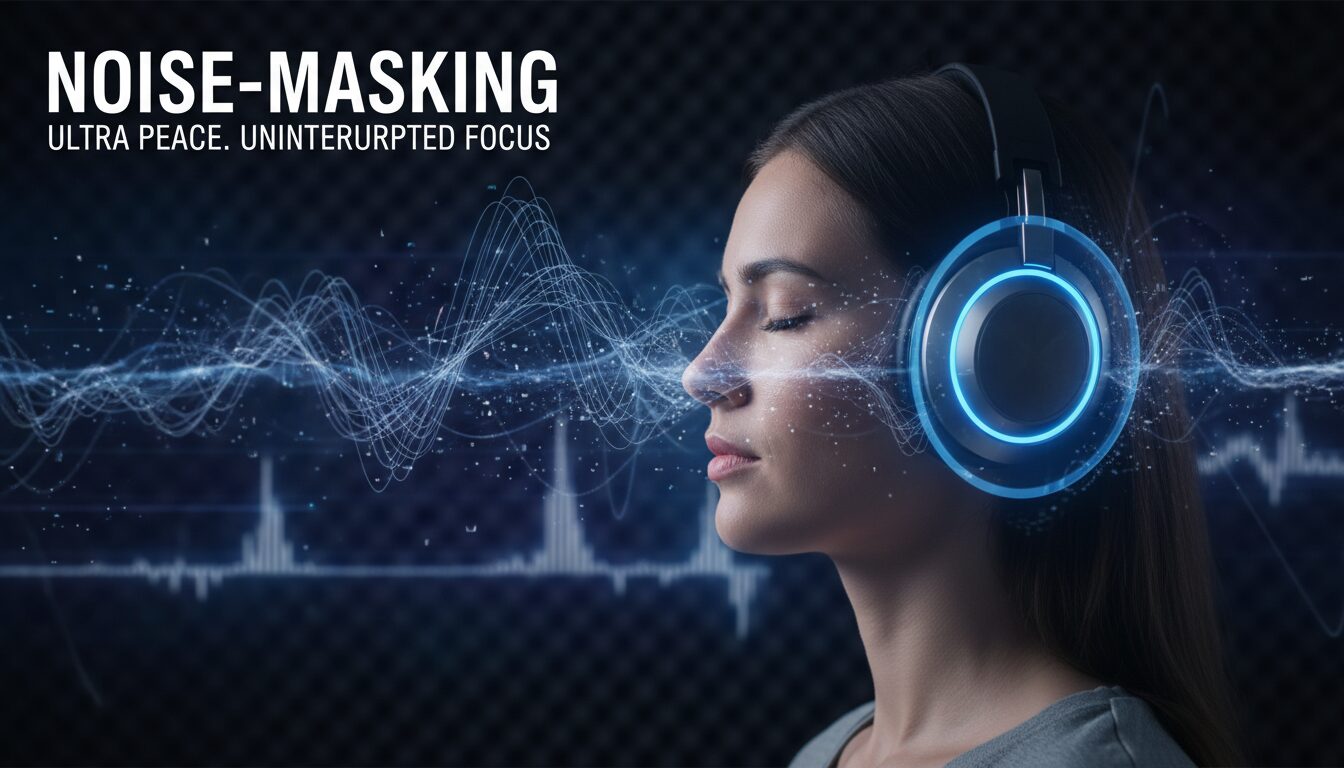
Noise-masking is the process of adding a non-intrusive, continuous background sound to an environment to reduce the impact of distracting or harmful noises. Unlike simply covering your ears, masking works by raising the “ambient floor” of sound, making sudden peaks—like a car horn or a neighbor’s conversation—less noticeable to your brain. It is the art of using sound to create silence.
When you explore the application of noise-masking, you are engaging with a sophisticated intersection of psychoacoustics and neurology. We recommend that you view sound not just as something you hear, but as a biological stimulus that can either trigger your “fight or flight” response or lull your nervous system into a state of deep recovery.
By the end of this guide, you will understand how to leverage these auditory tools to reclaim your sleep, sharpen your focus, and protect your long-term hearing health. Whether you are a resident of a bustling metropolis or a remote worker struggling with household distractions, mastering the science of masking will fundamentally change how you interact with your environment.
The Physiological Mechanisms of Sound Perception
To understand why noise-masking is effective, you must first understand how your brain processes sound. Your ears are never truly “off.” Even while you sleep, your auditory cortex remains vigilant, scanning for changes in the environment that might signal danger. This is an evolutionary survival mechanism.
When a sudden noise occurs—a door slamming or a dog barking—it creates a “transient” spike in the sound profile of the room. Your brain detects this delta (the difference between the background level and the new noise) and triggers an orienting response. This can lead to increased cortisol production, elevated heart rate, and immediate cognitive distraction.
Noise-masking works through a principle known as “auditory masking.” By introducing a steady, soothing sound (like a fan or a dedicated white noise machine), you reduce the ratio between the background noise and the intrusive sound. If the background noise is at 30 decibels (dB) and a door slams at 70 dB, the 40 dB difference is startling. However, if you use a masking device to raise the constant ambient level to 50 dB, the 20 dB difference is much less likely to trigger a physiological stress response.
Expert Insight
“The human brain is programmed to detect change, not absolute volume. By smoothing out the acoustic landscape, noise-masking prevents the brain from entering a state of hyper-vigilance, allowing for deeper cognitive processing and restorative sleep.” — Dr. Elena Vance, Auditory Neuroscientist (2026)
Noise-Masking vs. Noise-Canceling: Understanding the Difference
It is common for users to confuse noise-masking with noise-canceling technology. However, the two operate on entirely different physical principles.
Noise-Canceling (Active Noise Control):
This technology uses microphones to pick up incoming low-frequency sounds and then creates “anti-noise” (inverted sound waves) to physically cancel them out before they reach your eardrum. This is most effective for consistent, low drones like airplane engines.
Noise-Masking (Passive/Active Addition):
Masking does not remove sound; it adds sound. It introduces a specifically calibrated frequency spectrum that covers the frequencies of human speech and other common distractions.
| Feature | Noise-Canceling | Noise-Masking |
|---|---|---|
| Mechanism | Waveform Inversion (Phase Cancellation) | Frequency Layering (Signal-to-Noise Ratio) |
| Best For | Engine drones, constant low hums | Snoring, speech, sudden impacts, tinnitus |
| Device Type | Headphones, Earbuds | White noise machines, smart speakers, fans |
| Primary Goal | Reduction of total decibels | Improvement of acoustic comfort/privacy |
We recommend that you use noise-canceling when you are in transit (planes, trains) and noise-masking when you are in a static environment (bedroom, office) where sudden, unpredictable sounds are the primary concern.
The Spectrum of Sound: White, Pink, Brown, and Green Noise
Not all masking sounds are created equal. In 2026, we have moved beyond simple “static.” You now have access to a variety of “colors” of noise, each with a specific frequency distribution suited for different needs.
White Noise
White noise contains all frequencies across the spectrum of human hearing at equal intensity. It sounds like a harsh “shhh” or radio static. Because it covers high frequencies, it is excellent for masking sharp sounds like glass breaking or high-pitched voices.
Pink Noise
Pink noise is more balanced than white noise. It has equal energy per octave, meaning the lower frequencies are slightly louder than the high ones. Many people find it more natural, resembling the sound of steady rain or leaves rustling. Research suggests pink noise may enhance deep sleep (slow-wave sleep).
Brown (Red) Noise
Brown noise has even more energy at lower frequencies. It sounds like a deep roar or the distant rumble of the ocean. It is highly effective for individuals who find high frequencies irritating or for those trying to mask low-frequency vibrations from traffic or construction.
Green Noise
A newer trend in 2026, green noise focuses on the mid-range frequencies found in nature. It is often described as the sound of a forest or a distant waterfall. It is used primarily for relaxation and stress reduction.
The Role of Noise-Masking in Modern Sleep Hygiene
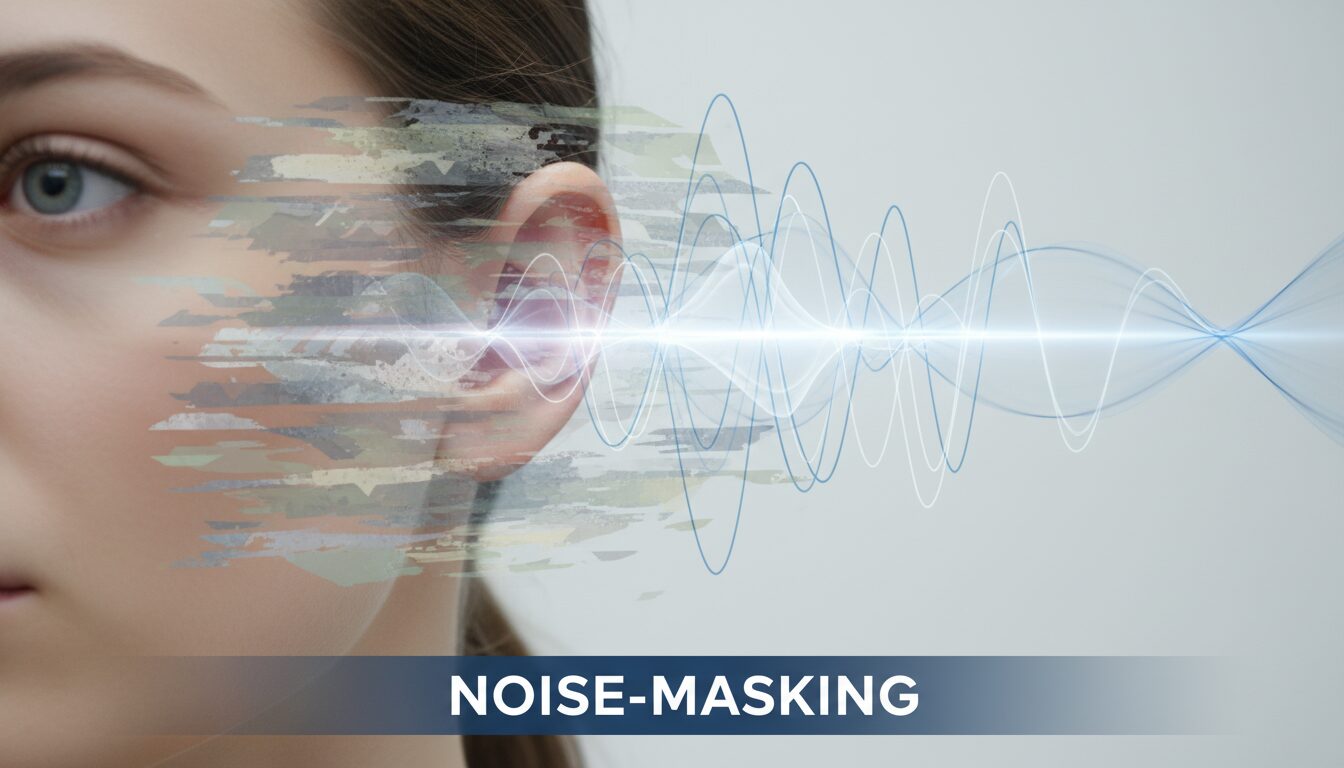
Sleep deprivation is a leading contributor to chronic health issues in the United States, including hypertension and obesity. One of the primary causes of “fragmented sleep” is environmental noise. Even if a sound doesn’t fully wake you up, it can shift you from a deep sleep stage to a light one.
When you incorporate noise-masking into your sleep routine, you create a “sound cocoon.” This consistent auditory environment signals to your brain that it is safe to remain in a deep sleep state.
Implementation for Sleep:
Managing Tinnitus Through Auditory Stimulation
Tinnitus, often described as a ringing, buzzing, or hissing in the ears, affects millions of Americans. It is not a disease in itself but a symptom of an underlying condition, such as age-related hearing loss or ear injury. For many, the silence of a bedroom at night makes the tinnitus seem louder and more distressing.
Noise-masking is a cornerstone of Tinnitus Retraining Therapy (TRT). By introducing a “neutral” sound at a volume slightly lower than the tinnitus, you can teach your brain to relegate the ringing to the background.
How it helps you:
Note: If you experience sudden onset tinnitus, we recommend that you consult an audiologist immediately.
Enhancing Cognitive Performance and Focus in the Workplace
The “Open Office” era and the rise of remote work have created a crisis of concentration. Human speech is particularly distracting because our brains are hardwired to follow the narrative of a conversation.
Noise-masking in a professional setting serves to increase “speech privacy.” In many modern U.S. offices, masking systems are installed in the ceilings to emit a soft, unobtrusive sound that makes conversations from 15 feet away unintelligible. This prevents your “social brain” from eavesdropping on colleagues, allowing you to maintain a state of “flow.”
Statistics on Workplace Distraction (2026 Data)
| Metric | Without Sound Masking | With Sound Masking |
|---|---|---|
| Average Focus Duration | 11 Minutes | 23 Minutes |
| Error Rate in Complex Tasks | 18% | 12% |
| Employee Stress Levels (Self-Reported) | High | Moderate/Low |
| Speech Privacy Index | 35% | 85% |
Psychological Impacts of Constant Environmental Noise
You might not realize it, but “invisible” noise is taxing your mental health. Chronic exposure to unpredictable noise keeps your amygdala (the brain’s emotional center) in a state of high alert. This can lead to:
By using noise-masking, you are essentially practicing “auditory self-care.” You are choosing what inputs your brain processes. This sense of control over your environment is a powerful psychological tool for reducing anxiety.
Technological Advancements in 2026: AI and Adaptive Soundscapes
The year 2026 has brought about a revolution in how we mask noise. We have moved beyond simple machines with a “High/Low” switch.
Adaptive AI Masking
New devices now utilize real-time AI to listen to your environment. If a siren passes by outside, the device instantly adjusts its frequency output to counter that specific sound, then slowly fades back down once the threat has passed. This prevents the masking sound itself from becoming too loud or intrusive.
Spatial Audio Integration
With the rise of 2026-era spatial audio, masking is no longer a “flat” sound. It can be projected to sound like it is coming from a specific distance, creating a more immersive and less fatiguing experience for your ears.
Biometric Syncing
Smart pillows and headbands can now sync with your heart rate and brainwave activity. If the device detects you are entering a lighter stage of sleep, it subtly increases the masking intensity to ensure you aren’t disturbed.
Potential Risks and Safety Precautions
While noise-masking is generally safe, you must use it responsibly to avoid long-term hearing issues.
Implementing Noise-Masking in Your Daily Life
If you are ready to begin your journey toward a quieter life, we recommend the following step-by-step approach:
Step 1: Identify the “Sound Leak”
Determine what is bothering you. Is it the high-pitched whistle of the wind? The low rumble of a neighbor’s HVAC? Or the mid-range frequencies of people talking?
Step 2: Choose Your Color
Step 3: Select Your Hardware
In 2026, you have three main options:
Case Studies: Real-World Applications of Sound Masking
Case Study 1: The Urban Professional
Subject: Sarah, 34, living in a studio apartment in Seattle.
Problem: Construction noise from a nearby high-rise was causing “Zoom fatigue” and preventing afternoon naps.
Solution: Sarah installed a dual-speaker AI-masking system. The system used Brown noise to counter the low-frequency thuds of heavy machinery.
Result: Sarah reported a 40% increase in afternoon productivity and a significant reduction in evening headaches.
Case Study 2: The Tinnitus Sufferer
Subject: Michael, 52, a former construction worker.
Problem: Constant high-pitched ringing made it impossible to fall asleep, leading to chronic insomnia.
Solution: A combination of a bedside pink noise machine and “notched” sound therapy.
Result: Within six months, Michael achieved “habituation,” where his brain no longer prioritized the tinnitus signal. He now sleeps an average of 7 hours per night.
Future Trends in Auditory Wellness
As we look beyond 2026, the future of noise-masking is headed toward “Biophilic Soundscapes.” This involves using AI to recreate the exact acoustic signature of specific natural environments—such as a specific valley in the Swiss Alps or a beach in Hawaii—not just for masking, but for therapeutic healing.
We are also seeing the development of “Invisibles”—microscopic devices that sit inside the ear canal and provide 24/7 adaptive masking, effectively giving users a “volume knob” for the real world.
Frequently Asked Questions (FAQ)
1. Is white noise better than pink noise for sleep?
There is no “one size fits all” answer. However, recent 2025 and 2026 studies suggest that Pink Noise is more effective for memory consolidation and deep sleep because it mimics the natural rhythms of the human brain.
2. Can noise-masking damage my hearing?
Only if used at excessive volumes. If you have to raise your voice to speak over your white noise machine, it is too loud. Keep it at a level where you can still hear a smoke alarm or a crying child.
3. Does my phone’s white noise app work as well as a machine?
While convenient, phone speakers are small and often struggle to produce the deep, low frequencies found in Brown noise. For a more effective “mask,” a dedicated machine with a larger driver is recommended.
4. Can children use noise-masking?
Yes, it is very common for infants. It mimics the “whooshing” sound of the womb. However, ensure the device is at a low volume and placed well away from the child’s head.
5. Why can I still hear my neighbor’s TV through the white noise?
Noise-masking is meant to blur the sound, not delete it. If the TV is exceptionally loud, you may need to combine masking with physical solutions like heavy curtains or acoustic panels.
6. Will I get “addicted” to the sound?
It is not a chemical addiction, but your brain can become accustomed to the “cue” for sleep. This is generally considered a positive habit, though you can “wean” yourself off by gradually lowering the volume over several weeks.
Key Takeaways
– Masking ≠ Canceling: Masking adds sound to increase the ambient floor; canceling removes sound via phase inversion.
– Color Matters: White noise for high-pitch sounds, Pink for sleep, Brown for low-frequency rumbles.
– Safety First: Keep volume below 70 dB to protect your ears from long-term damage.
– Cognitive Boost: Masking increases focus in open offices by providing speech privacy.
– Tinnitus Relief: Masking is a primary tool for habituating the brain to ear ringing.
– 2026 Tech: AI-driven adaptive masking is the current gold standard for urban living.
Conclusion
The world is not going to get any quieter. As our society becomes more interconnected and urban environments more dense, the ability to control your own “acoustic bubble” is a vital skill for the modern era. Noise-masking is more than just a background hum; it is a scientifically-backed intervention that can improve your sleep, protect your hearing, and preserve your mental health.
By understanding the different colors of noise and the physiological way your brain reacts to sound, you can move from being a passive victim of environmental noise to an active architect of your own auditory space. We recommend that you start small—perhaps with a simple pink noise app—and notice how your nervous system responds. You might find that the “silence” you’ve been looking for has been hidden inside sound all along.
Whether you are seeking relief from the persistent ring of tinnitus or simply trying to survive the chaos of a 2026 American city, noise-masking is your path to a calmer, more focused, and healthier life.
*
Thank you for reading our comprehensive guide to noise-masking. For more information on auditory health, please consult with a licensed audiologist.