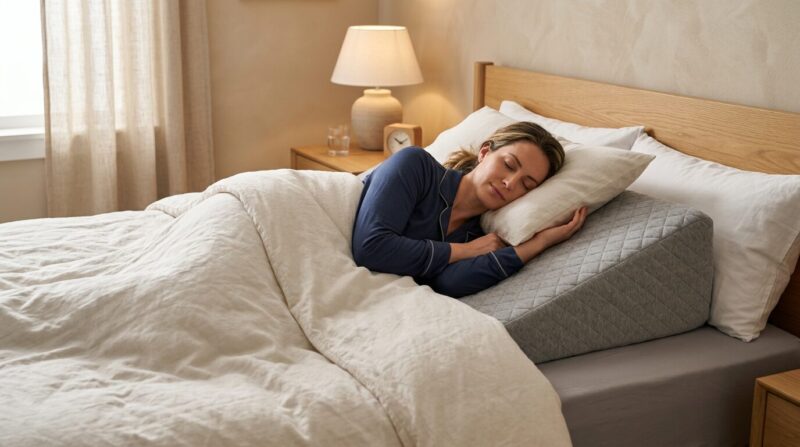

🔥 Are you waking up feeling like you went ten rounds in a wrestling ring, even though you just slept in your own bed? We’ve all been there, friend! You drag yourself out of the sheets, pop a pain reliever, and wonder why your back feels like it’s eighty years old. It’s 2026, and we shouldn’t be dealing with “morning stiffness” like it’s a lifestyle choice. 🛌 Your spine deserves better, and frankly, so do you. Whether you’re a side sleeper, a back sleeper, or one of those mysterious stomach sleepers (we need to talk about that!), fixing your posture while you snooze is the ultimate cheat code for crushing your day. Let’s dive into the juicy details on how to wake up feeling like a million bucks every single morning. ⚡️
Contents
- The Wake-Up Call: Why Sleep Posture Actually Matters
- Mastering the Art of Side Sleeping
- Back Sleeping: The Gold Standard
- The Stomach Sleeping Struggle
- Pillow Talk: How Your Setup Changes Everything
- Daily Habits to Supercharge Your Sleep Alignment
- Sıkça Sorulan Sorular
- Side Sleepers: You need “loft.” Look for firmer, thicker pillows that fill that shoulder-to-ear gap. Memory foam or latex are great here because they don’t flatten out halfway through the night. 🧱
- Back Sleepers: You need “cradle.” A medium-firm pillow that contours to your head and neck but keeps your chin level is the winner. 🕊️
- Stomach Sleepers: You need “minimalist.” The thinner, the better. Look for down or down-alternative pillows that compress easily so your neck isn’t bent at a crazy angle. ☁️
🚀 The Wake-Up Call: Why Sleep Posture Actually Matters
👀 Let’s be real for a second: you spend roughly one-third of your life in bed. If you’re spending that time twisted like a pretzel, you’re basically sabotaging yourself before you even hit the snooze button. Your spine is the highway for your nervous system, and when you sleep in awkward positions, you’re creating traffic jams. 🚦 Poor sleep posture leads to chronic neck pain, lower back agony, and that nagging shoulder discomfort that just won’t quit.
✨ Think of your sleep setup as the foundation of your house. If the foundation is wobbly, everything else feels wrong. By optimizing your posture while you drift off, you’re not just avoiding pain—you’re boosting your recovery, keeping your energy levels high, and ensuring that you don’t look like a zombie when you walk into the office (or your home office). 🥳 It’s not just about comfort; it’s about mechanical efficiency, baby! Let’s get that alignment dialed in so you can wake up ready to absolutely crush it. 💯
Important: If you have chronic, severe spinal issues or nerve pain, always chat with a physical therapist or a doctor before making radical changes to your sleep setup. Your health is the priority! 🩺
🛌 Mastering the Art of Side Sleeping
侧 (Side) sleeping is the most popular way to snooze, and honestly? It’s a vibe. But there is a wrong way to do it. If you’re just collapsing onto your side without any support, you’re likely twisting your spine and letting your top shoulder collapse forward. 🚨 That’s a recipe for shoulder impingement and weird hip pain. We need to fix that alignment, pronto!
🎯 The “Hug and Tuck” Technique
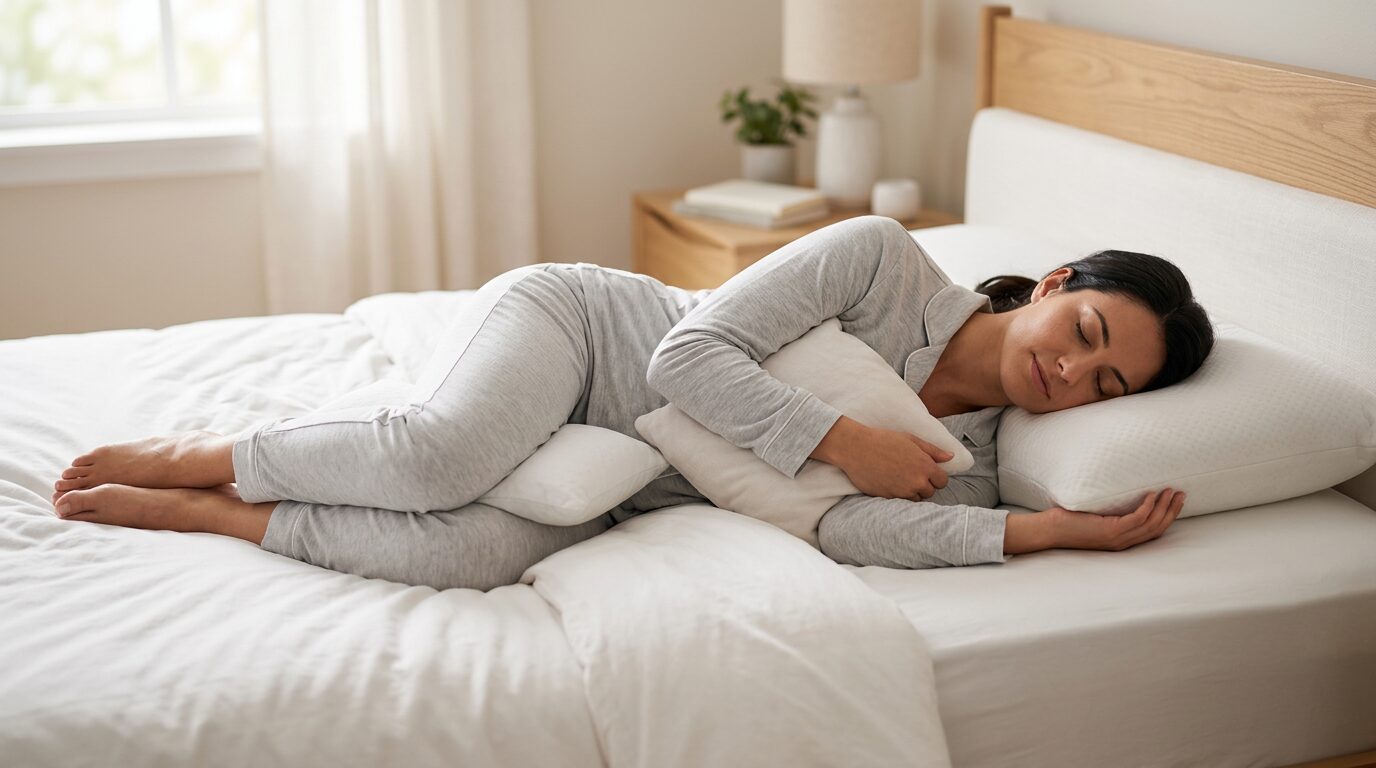
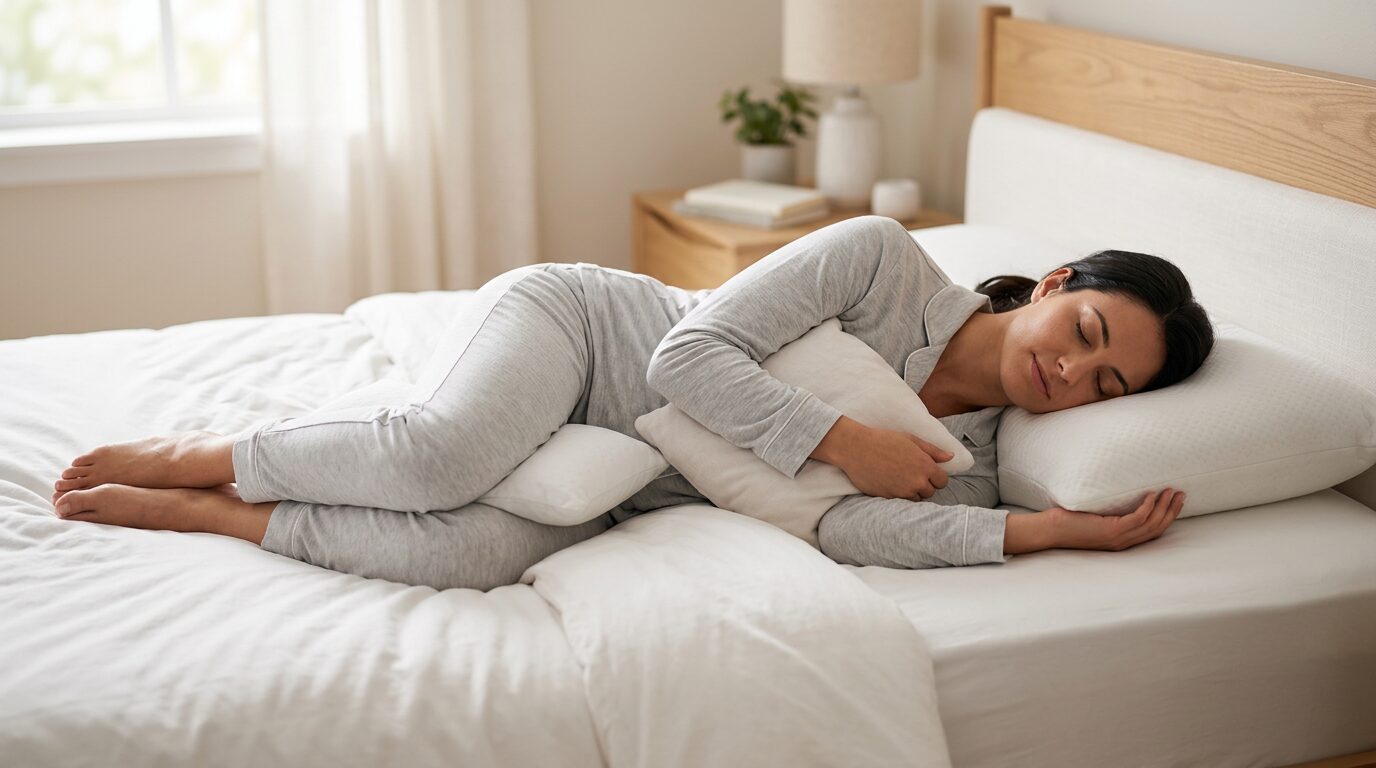
The secret sauce for side sleepers is the trusty knee pillow. When you lie on your side, your top leg tends to pull your spine out of alignment by rotating your hips. 🤯 Placing a firm pillow between your knees keeps your hips stacked, relieving the pressure on your lower back. It’s a total game-changer. Also, make sure your pillow isn’t too flat. You need enough height to fill the gap between your ear and the mattress so your neck stays neutral. Keep your head straight, not tilted down or up. 👑
💡 Pro-Tip for Shoulder Relief
Are you waking up with “dead arm” or shoulder pain? Try hugging a second pillow against your chest while you sleep. This prevents your top shoulder from drooping forward and puts your entire upper body into a much more stable position. It feels like you’re cuddling a giant plushie, and your spine will thank you for it! 🧸
| Feature | Bad Side Sleeping | Good Side Sleeping |
|---|---|---|
| Hips | Unaligned/Twisted | Stacked & Parallel |
| Neck | Tilting Down/Up | Neutral (Aligned with Spine) |
| Support | None | Pillow between knees |
| Shoulder | Collapsed forward | Supported/Hugged |
🌟 Back Sleeping: The Gold Standard
😎 If you’re a back sleeper, congratulations! You’ve already won half the battle. Sleeping on your back (the “supine” position, if you want to sound fancy) is generally considered the best way to keep your spine neutral and your joints happy. 💎 It distributes your body weight evenly, reducing pressure points that cause you to toss and turn throughout the night. But even here, there’s room to level up.
🚀 Creating the Perfect Curve
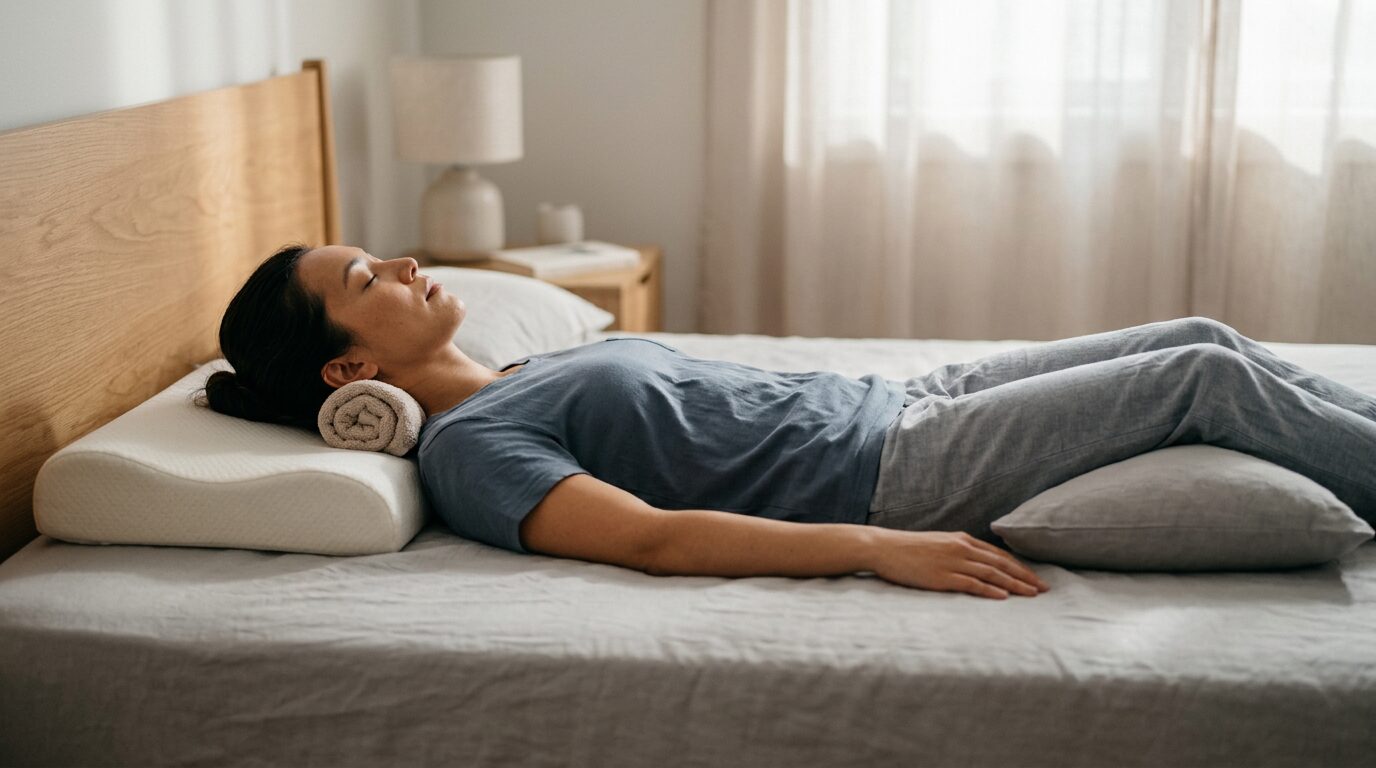
Your lower back (the lumbar region) naturally curves inward. Sometimes, mattresses don’t support that curve, leaving a gap that strains your muscles. 🌈 Grab a small, thin pillow or a rolled-up towel and slide it right under your lower back. It sounds like a tiny change, but it provides that “just right” support that prevents your back muscles from working overtime while you catch Z’s. 💤
⚡️ Pillow Selection Matters
For back sleepers, you don’t want a massive pillow that props your head up like you’re reading a book in bed. You want something low-profile that supports the natural curve of your neck without pushing your head forward. 🎈 If you feel your chin tucking into your chest, your pillow is way too thick. Swap it out for something softer and lower, and watch that neck pain vanish. 🪄
Important: Consistency is the real secret sauce. Your body takes time to adjust to new alignment patterns, so don’t give up if the first night feels a bit weird! ⏳
😈 The Stomach Sleeping Struggle
🚫 Okay, look. We need to have a serious talk about stomach sleeping. I know, I know—it feels cozy. But from a structural standpoint, it’s arguably the worst position you could pick. When you sleep on your stomach, you usually have to turn your head to one side to breathe, which puts massive torque on your cervical spine (neck). Plus, it causes your lower back to sag into the mattress, cranking on your lumbar discs. 😱
💥 How to Transition Out of It
If you just have to sleep on your stomach, start by weaning yourself off. Try using a very flat, thin pillow (or no pillow at all) to reduce the neck angle. Also, place a flat pillow under your hips. This helps lift your pelvis and keeps your lower back from arching too hard. 🏗️ It’s a band-aid solution, but it’s much better than nothing. The ultimate goal? Try to roll onto your side or back. Use body pillows to create a “barrier” so you don’t roll onto your stomach during the night. It’s like training wheels for your sleep! 🚲
⚡️ Why Your Neck is Screaming
Stomach sleeping creates that gnarly “crunch” in the vertebrae of your neck. Over time, that leads to headaches and tightness in the traps. If you wake up with a headache, 9 times out of 10, it’s that neck twist. Let’s get you aligned! 🦾
💡 Pillow Talk: How Your Setup Changes Everything
✨ In 2026, the sleep industry is absolutely popping off with innovation. We have memory foam, latex, cooling gels, and adjustable air bladders. But the “best” pillow isn’t the most expensive one—it’s the one that fits your specific body mechanics. 🏆
🚀 Matching Pillow to Position
💸 Don’t Ignore the Mattress
Your mattress is the ultimate game piece. If your mattress is sagging like an old hammock, no amount of fancy pillows is going to save your posture. 📉 If your mattress is more than 8-10 years old, it’s probably time to invest in your future self. A medium-firm mattress is usually the sweet spot for the vast majority of people, providing a mix of support and comfort. 🏗️
📈 Daily Habits to Supercharge Your Sleep Alignment
💪 Sleep is only half the battle. What you do during the day dictates how your body feels when you hit the sack. If you spend 10 hours hunched over a laptop, your muscles are going to be “locked” in that posture by the time you go to bed. 💻 You’ve got to undo the damage before you lay down.
🏹 The Daily “Reset”
Do some gentle thoracic extension exercises. Stand in a doorway, put your arms up in a “W” shape, and lean forward. This opens up your chest and counters that “tech neck” hunch. 🧘 Also, try to get in some light movement before bed. A 10-minute stretch routine—focusing on hip flexors and chest openers—preps your body to settle into a neutral, relaxed position. 🏃♂️
🎯 Mindful Awareness
Pay attention to how you sit. If you spend your whole day slumped in a gaming chair or office chair, your muscles are learning to hold that bad shape. 🕹️ Correct your sitting posture with a lumbar cushion, and by the time night rolls around, your spine will be much easier to keep straight in bed. Think of it as preparing the canvas! 🎨
Important: If your job requires heavy lifting or repetitive motions, see a specialist for ergonomic advice. Your body is an asset—protect it! 💼
❓ Sıkça Sorulan Sorular
❓ Is memory foam actually better for sleep posture?
It depends! Memory foam is awesome because it contours to your body and relieves pressure points, which helps with alignment. However, if it’s too soft, you might sink in too much and lose support. Look for high-density foam that provides support while still feeling like you’re sleeping on a cloud. ☁️
❓ Can I really change my sleep position at age 30+?
Absolutely, kanka! It takes some discipline, but you can train your body to prefer a new position. Using body pillows to “box” yourself into a back-sleeping position works wonders. It might take a week or two of uncomfortable adjustment, but your spine will thank you forever. 🧠
❓ Does the firmness of my mattress really change my posture?
100%. A mattress that is too soft makes your spine dip, while one that is too hard creates pressure points that make you twist to find relief. Medium-firm is the industry standard for 2026 for a reason—it’s the perfect compromise between support and comfort. 🏗️
❓ What if I wake up with lower back pain every single day?
First, check your sleeping position (stop stomach sleeping!). Second, consider placing a pillow under your knees if you sleep on your back, or between them if you sleep on your side. If it persists for more than two weeks, please go see a medical professional. Don’t play around with chronic pain! 🏥
❓ Should I sleep without a pillow to fix my posture?
For most people, no. Sleeping without a pillow can strain your neck because your head has nothing to support it, leading to a weird angle. The only exception is if you are a stomach sleeper, where a very thin pillow or nothing at all might be better than a thick one. Stick to a supportive pillow! 😴
❓ Can “sleeping wrong” actually cause long-term damage?
Yep, over years, bad posture can lead to chronic spinal issues, joint degradation, and muscular imbalances. It’s like wearing shoes that are too small every single day; eventually, your feet are going to protest. Fixing your sleep setup is a long-term investment in your mobility. 🚀
❓ How often should I replace my pillows?
If you can fold your pillow in half and it stays there, it’s dead, bro! 💀 A good rule of thumb is every 1-2 years for most pillows. If you’re waking up with neck stiffness regularly, that’s your biggest sign that your pillow has lost its structural integrity and needs to go to the trash bin. 🗑️