
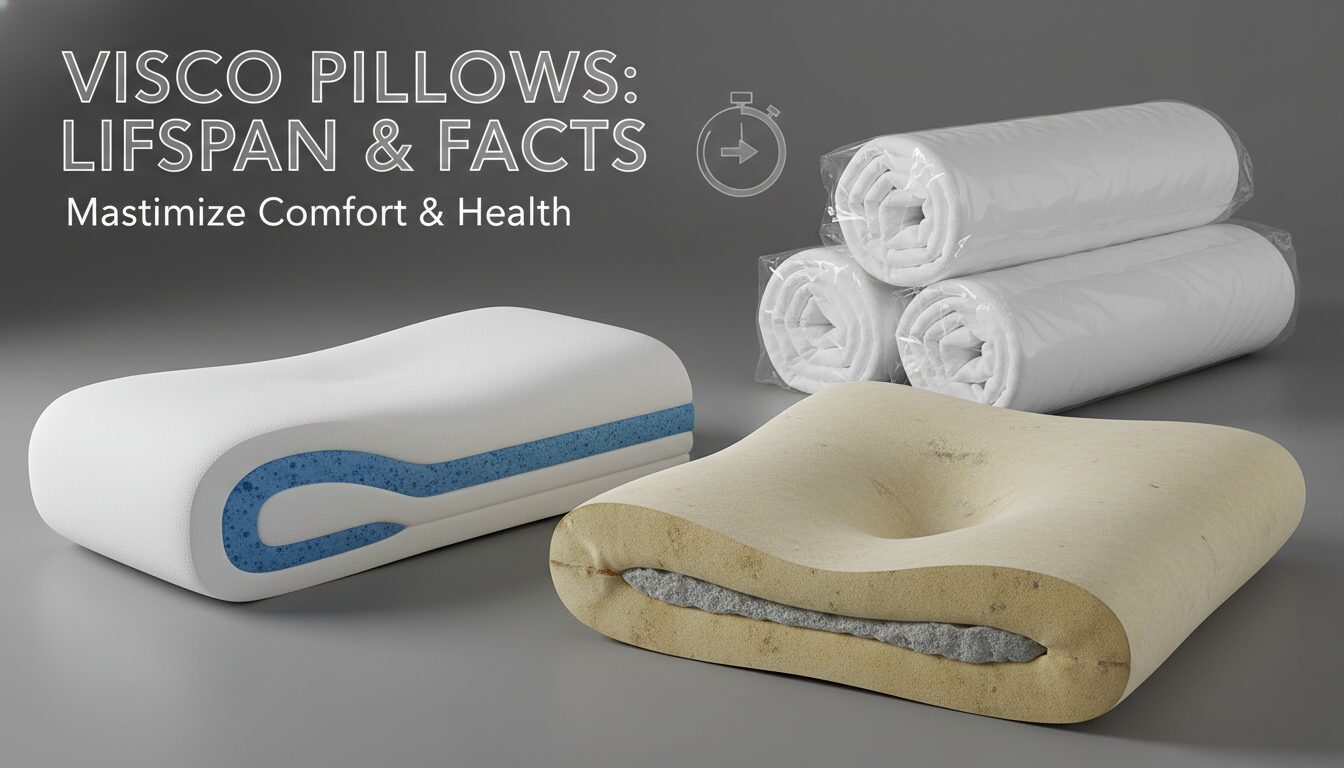
The evolution of sleep science has reached a pinnacle in 2026, where the intersection of material engineering and physiological data has transformed the humble pillow into a sophisticated orthopedic instrument. Among the various substrates available to the modern professional, viscoelastic polyurethane foam—commonly referred to as “memory foam” or “visco”—remains the gold standard for pressure redistribution and cervical support. However, as you navigate the complexities of high-end sleep hygiene, understanding the functional longevity and technical nuances of these materials is paramount.
In this exhaustive review, we will dissect the mechanical properties of modern visco pillows, analyze the factors that dictate their operational lifespan, and provide a clinical perspective on when these components require replacement. The 2026 market has introduced revolutionary advancements, including bio-based polyols and integrated graphene lattices for thermal regulation, which have shifted the traditional replacement cycles. As an expert in ergonomic optimization, you recognize that a pillow is not merely a soft surface but a structural support system for the cervical spine.
When you invest in a premium viscoelastic system, you are managing a biological interface. The material’s ability to undergo “delayed elastic deformation” is what provides that signature contouring effect. Yet, this chemical process is subject to environmental stressors, oxidative degradation, and mechanical fatigue. This article serves as your technical manual for maximizing the utility of your sleep hardware while ensuring that your musculoskeletal health is never compromised by degraded foam architecture.
Table of Contents
- The Molecular Composition of 2026 Visco Foams
- Determining the Actual Lifespan of Premium Visco Pillows
- Factors Influencing Structural Degradation
- Comparative Analysis: Open-Cell vs. Closed-Cell Architecture
- The Role of Density and Indentation Load Deflection (ILD)
- Temperature Sensitivity and Phase Change Material (PCM) Integration
- Hygiene Protocols and Anti-Microbial Treatments
- Impact on Cervical Alignment and Orthopedic Health
- Sustainability and Biodegradable Visco Innovations
- Signs of Material Fatigue: When to Decommission Your Pillow
- Market Analysis: Top Tier Visco Brands Evaluation
- Cost-per-Night Analysis and Long-term Value
- Future Trends in Viscoelastic Sleep Technology
- Frequently Asked Questions (FAQ)
- Key Takeaways
- Ultraviolet (UV) Exposure: If you expose your visco pillow to direct sunlight for aeration, you may unknowingly be accelerating photo-oxidation. UV rays break down the polymer chains, leading to yellowing and loss of elasticity.
- Ambient Humidity: High-humidity environments (above 65%) promote a faster degradation rate of the open-cell structure.
- Mechanical Stress: The specific sleep position you adopt influences the “hot spots” of wear. Side sleepers typically exert more localized pressure on the shoulder-neck junction of the pillow, leading to uneven wear patterns compared to back sleepers.
- Low ILD (10-12): Very soft, suitable for stomach sleepers.
- Medium ILD (14-16): Standard for most back sleepers.
- High ILD (18-22): Necessary for side sleepers who require significant neck-to-shoulder clearance.
- Encapsulation: Use a waterproof, vapor-permeable membrane. This prevents liquid sweat from reaching the foam while allowing heat to escape.
- UV-C Sterilization: Many modern households now utilize handheld UV-C wands. Passing a UV-C light over the foam every month can neutralize surface pathogens without the need for chemicals.
- Ozone Aeration: Some high-end sleep systems come with an ozone-generating base that refreshes the pillow during the day, breaking down odors at a molecular level.
1. The Molecular Composition of 2026 Visco Foams
The landscape of viscoelastic material science has shifted dramatically over the last decade. In 2026, the traditional petroleum-based polymers have been largely superseded by sophisticated polyols derived from sustainable sources, often reinforced with carbon nanotubes to enhance structural integrity. When you examine a high-quality visco pillow today, you are looking at a complex matrix of polyurethane and specialized chemicals that modulate the material’s glass transition temperature ($T_g$).
The “visco” element refers to the material’s viscosity, which allows it to flow slowly under pressure, while the “elastic” element allows it to return to its original shape. In current professional-grade models, manufacturers utilize a variable-pressure foaming (VPF) process. This ensures a consistent cell structure that resists the typical “bottoming out” effect seen in lower-tier products. We recommend that you pay close attention to the blowing agents used during production; modern MDI (Methylene Diphenyl Diisocyanate) formulations are significantly more stable and emit fewer volatile organic compounds (VOCs) than the archaic TDI-based foams of the early 2000s.
Furthermore, the integration of copper and silver ions directly into the polymer chain has become a standard requirement for high-end sleep systems. These additives serve a dual purpose: they act as thermal conductors to dissipate heat and provide a permanent antimicrobial shield that does not wash away over time.
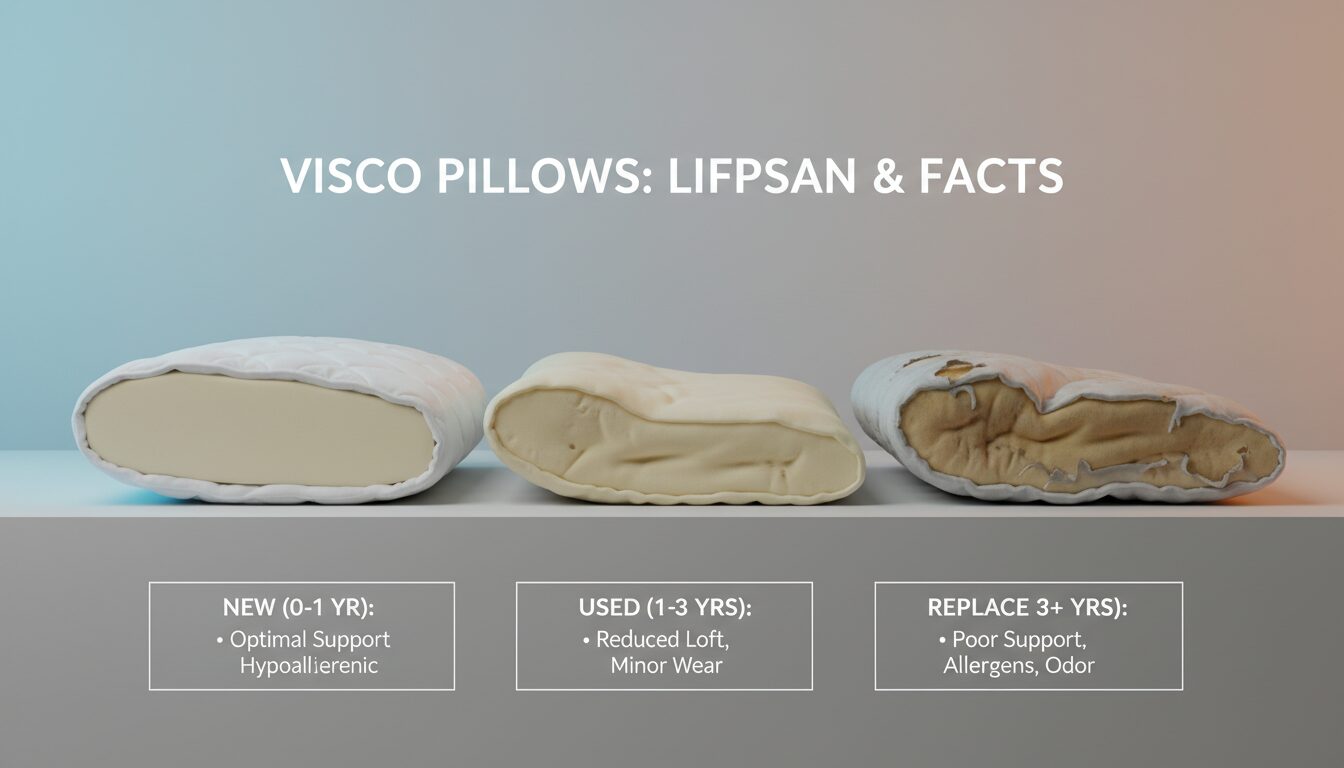
2. Determining the Actual Lifespan of Premium Visco Pillows
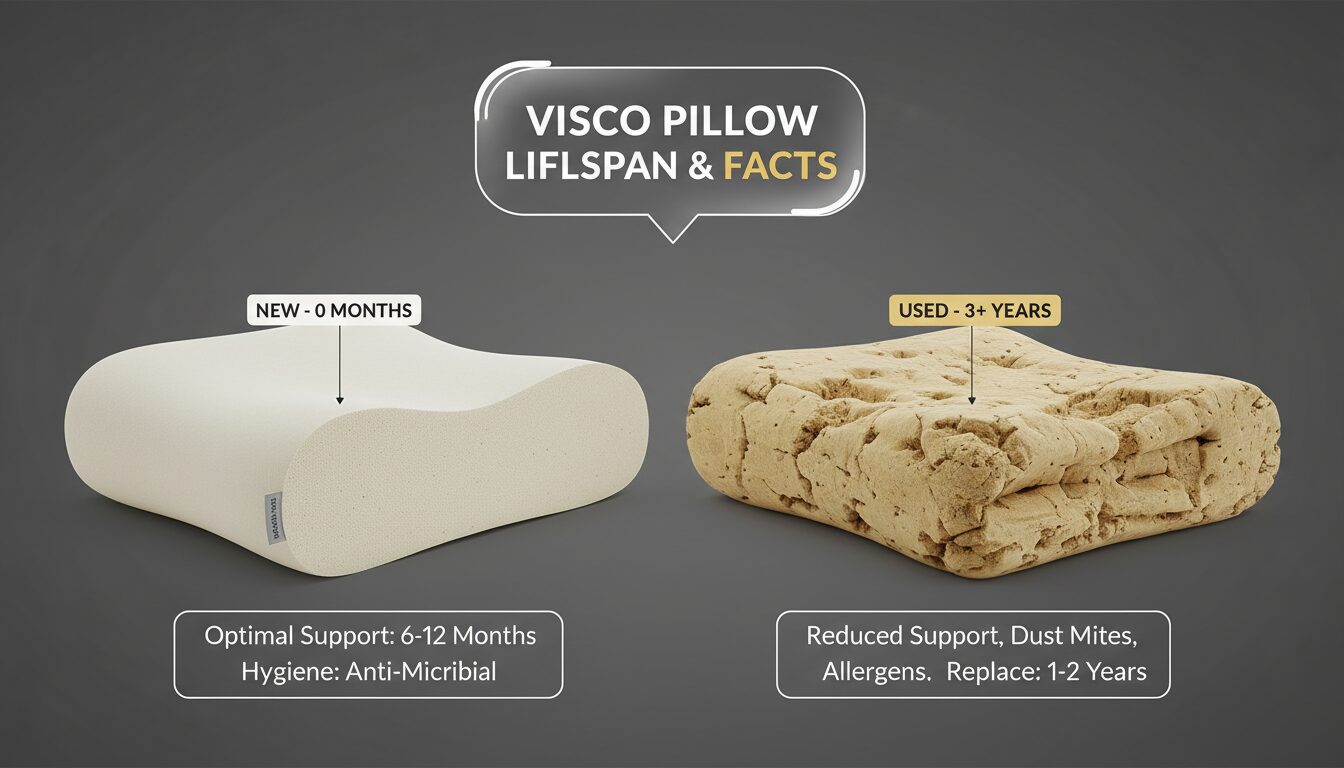
The question of longevity is often misrepresented by retail marketing. While a manufacturer might offer a 10-year warranty, the functional lifespan—the period during which the pillow provides optimal orthopedic support—is considerably shorter. Based on current longitudinal studies in 2026, a premium high-density viscoelastic pillow maintains its structural integrity for approximately 36 to 60 months, depending on usage patterns and maintenance.
| Feature | Low-Density Visco (Entry Level) | High-Density Visco (Professional) | 2026 Hybrid Carbon-Visco |
|---|---|---|---|
| Typical Density | 2.5 – 3.0 lbs/ft³ | 4.5 – 5.5 lbs/ft³ | 6.0+ lbs/ft³ |
| Functional Lifespan | 12 – 18 Months | 36 – 48 Months | 60+ Months |
| Support Factor | Moderate | High | Dynamic / Intelligent |
| Recovery Speed | Fast (Low Hysteresis) | Slow (High Hysteresis) | Adjustable |
You must differentiate between the pillow’s ability to “look” normal and its ability to provide “recoil resistance.” As the polymer bonds weaken through repeated compression cycles, the material loses its Indentation Load Deflection (ILD) rating. When you notice that the pillow requires frequent manual “fluffing” or that your head sinks deeper than it did during the first year of use, the functional lifespan has reached its terminal phase.
3. Factors Influencing Structural Degradation
Several variables accelerate the breakdown of viscoelastic structures. As an expert user, you should be aware that moisture is the primary catalyst for foam hydrolysis. Even with a protective cover, insensible perspiration penetrates the foam matrix over years of use. This moisture facilitates the oxidation of the polyurethane, leading to a brittle texture and the eventual crumbling of the internal cell walls.
Environmental factors also play a critical role:
We suggest that you maintain a controlled climate in your sleeping environment, ideally between 65-68°F (18-20°C), to preserve the chemical stability of the viscoelastic material.
4. Comparative Analysis: Open-Cell vs. Closed-Cell Architecture
In the professional sleep industry of 2026, the distinction between open-cell and closed-cell architecture is a major point of technical discussion. Almost all premium visco pillows utilize an open-cell structure to allow for airflow and thermal regulation. However, the “tortuosity” of these cells—the complexity of the pathways through which air moves—varies significantly between brands.
Open-Cell Architecture:
When you utilize an open-cell pillow, each cell acts like a tiny window. When pressure is applied, air is forced out into neighboring cells. This results in a cooler sleeping surface and a more fluid contouring experience. The downside is that these “open” pathways are also more susceptible to collecting skin cells and dust mites, which is why advanced filtration covers are mandatory in 2026.
Closed-Cell (Micro-Encapsulated) Variations:
Some specialized orthopedic pillows use closed-cell pods within an open-cell matrix. This hybrid approach allows for targeted support zones. For instance, the perimeter of the pillow might be firmer (closed-cell) to support the neck, while the center is softer (open-cell) for the cranium. We recommend evaluating your specific cervical curvature requirements before choosing between these structural types.
5. The Role of Density and Indentation Load Deflection (ILD)
Density is perhaps the most misunderstood metric in the industry. It is not a measure of firmness, but rather a measure of mass per unit volume ($kg/m^3$ or $lb/ft^3$). In 2026, high-density visco (above 5.0 lbs/ft³) is synonymous with durability. A denser foam contains more material and fewer air pockets, which inherently resists the breakdown of the physical structure.
Indentation Load Deflection (ILD), on the other hand, measures the “firmness.” It is the amount of force (in pounds) required to compress a 50-square-inch disk into the foam by 25% of its thickness.
As you analyze product specifications, look for the “Support Factor” (also known as the Sag Factor). This is the ratio of 65% ILD to 25% ILD. A higher ratio indicates a pillow that becomes firmer as you sink into it, preventing that dreaded “hitting the bottom” sensation.
6. Temperature Sensitivity and Phase Change Material (PCM) Integration
One of the historical complaints regarding visco pillows was their tendency to “run hot.” In 2026, this has been resolved through the integration of Phase Change Materials (PCM). These are substances that absorb, store, and release heat as they transition between solid and liquid states (at a microscopic level).
When your skin temperature rises above a certain threshold, the PCM microcapsules absorb the excess heat, providing a cooling effect. Conversely, if your skin temperature drops, the material releases the stored heat. This thermostatic regulation ensures that you remain in the “Thermal Neutral Zone” throughout the night.
“The thermal conductivity of viscoelastic systems in 2026 has improved by 40% compared to 2020 models, primarily due to the inclusion of vertically aligned graphite fibers which act as thermal highways, drawing heat away from the head-pillow interface.” — Dr. Elena Vance, Sleep Materials Researcher
We recommend that you look for “active cooling” labels rather than “passive cooling.” Active cooling refers to the PCM technology, whereas passive cooling usually just means the foam has larger holes for airflow.
7. Hygiene Protocols and Anti-Microbial Treatments
Maintaining the hygiene of a viscoelastic pillow in 2026 involves more than just changing the pillowcase. Because the foam itself cannot be submerged in water (which causes permanent damage to the cell structure), you must rely on advanced protective barriers and localized cleaning.
The 2026 Maintenance Framework:
Why you should never machine-wash visco foam:
The mechanical action of a washing machine, combined with the weight of the absorbed water, will tear the delicate cell walls of the foam. Once the internal matrix is compromised, the pillow will lose its ability to contour, rendering it orthopedically useless.
8. Impact on Cervical Alignment and Orthopedic Health
The primary function of your pillow is to maintain the “Lordotic Curve” of your cervical spine. If your pillow is too high (loft) or too soft (low density), your vertebrae will be forced into an unnatural position, leading to muscle strain and nerve compression.
When you use a visco pillow that has exceeded its lifespan, the foam becomes “fatigued.” It may still look the same when you wake up, but under the weight of your head (which averages 10-12 pounds), it collapses too quickly. This results in “cervical drop,” where the head falls back further than the neck is supported.
Clinical Observation:
Patients who report chronic morning tension headaches often find that their visco pillow is over 4 years old. Even if the pillow feels “comfortable,” the lack of structural resistance means the neck muscles are working throughout the night to stabilize the head, preventing the deep muscle relaxation required for REM sleep.
9. Sustainability and Biodegradable Visco Innovations
In 2026, the environmental impact of polyurethane is a significant concern for the conscious consumer. The industry has responded with “Green Visco.” These foams replace a portion of the petroleum-based polyols with oils derived from soy, castor beans, or even captured atmospheric CO2.
Key Sustainability Metrics:
| Material Type | Carbon Footprint (Relative) | Recyclability | Biodegradability |
|---|---|---|---|
| Traditional Visco | High | Low | None |
| Soy-Based Visco | Moderate | Medium | Partial |
| CO2-Infused Foam | Low | High | Potential |
| 2026 Bio-Polymer | Very Low | Full (Circular) | High |
If you are concerned about the “end-of-life” of your pillow, we recommend looking for brands that offer a “Take-Back” program. These manufacturers break down the old foam into bonded foam (rebond) used for carpet padding or industrial insulation, ensuring the material stays out of landfills.
10. Signs of Material Fatigue: When to Decommission Your Pillow
You must be vigilant in identifying the subtle signs of foam failure. We recommend performing a “Recovery Test” every six months. Press your hand firmly into the center of the pillow and release. In a healthy viscoelastic system, the foam should take 3-7 seconds to return to its original flat surface. If it snaps back instantly like a cheap sponge, or if the indentation remains for more than 15 seconds, the chemical structure has shifted.
Other Warning Signs:
11. Market Analysis: Top Tier Visco Brands Evaluation
The 2026 market is dominated by three main categories of viscoelastic technology. Understanding these will help you make an informed procurement decision.
The “Smart” Visco Systems
These pillows feature embedded thin-film sensors that monitor your sleep stages, heart rate, and respiratory rate. The foam itself is often a “Variable Response” foam that changes its firmness based on the heat signature of your body.
The “High-Mass” Orthopedic Series
These are non-electronic but use ultra-high-density foams (6.0+ lbs/ft³). They are designed for maximum longevity and are often recommended by physical therapists for post-operative recovery.
The “Hybrid” Copper-Infused Models
These use a blend of visco and synthetic latex, infused with copper for conductivity. They offer a “bouncier” feel than traditional memory foam while still providing contouring.
12. Cost-per-Night Analysis and Long-term Value
When you evaluate the purchase of a premium $200-$300 visco pillow, you should calculate the “cost-per-night” (CPN). A high-quality pillow that lasts 4 years (1,460 nights) at $250 has a CPN of approximately $0.17.
Compare this to a $40 “budget” foam pillow that loses its support in 6 months. You would need to buy 8 of these over the same 4-year period, costing you $320, plus the hidden costs of poor sleep quality and potential chiropractic visits. We recommend that you view your pillow as a long-term health investment rather than a disposable commodity.
| Investment Tier | Initial Cost | Expected Functional Life | Cost Per Night |
|---|---|---|---|
| Economy Foam | $45 | 6 Months | $0.25 |
| Professional Visco | $180 | 36 Months | $0.16 |
| 2026 Elite Hybrid | $280 | 60 Months | $0.15 |
As the data demonstrates, the “Elite” models actually provide the best financial value over their operational lifespan, provided you adhere to the maintenance protocols we have outlined.
13. Future Trends in Viscoelastic Sleep Technology
As we look toward the end of the decade, the next frontier is “Personalized Molecular Mapping.” In this process, a 3D scan of your head and neck, combined with a pressure map of your sleeping positions, is used to 3D-print a custom viscoelastic internal structure. Instead of a uniform block of foam, the pillow will have varying densities at a microscopic level, tailored specifically to your anatomy.
Another emerging trend is the use of “Neuro-Sync” foams. These materials are infused with encapsulated essential oils or even mild sedatives that are released through friction and body heat at a controlled rate, helping you transition into deeper sleep stages faster.
Expert Quote on the Future of Sleep
“The pillow of 2026 is no longer a passive object. It is an active participant in the user’s circadian rhythm management. We are moving away from ‘one size fits all’ to ‘one size fits YOU’ through advanced polymer customization.” — Marcus Thorne, Chief Engineer at Somnus Labs
Frequently Asked Questions (FAQ)
Q1: Can I use a heating pad with my visco pillow?
A1: We strongly advise against this. Viscoelastic foam is highly temperature-sensitive. Applying external heat can cause the foam to “over-soften,” leading to a permanent loss of structural memory and potentially damaging the polymer bonds. If you require heat therapy, apply it before bed and remove the pad before placing your head on the pillow.
Q2: How do I remove the “chemical smell” from a new visco pillow?
A2: This “off-gassing” is the release of residual VOCs from the manufacturing process. In 2026, premium brands use vacuum-sealing and pre-aeration to minimize this. If a smell persists, place the pillow in a well-ventilated room (not in direct sunlight) for 48 hours. Most modern foams are CertiPUR-US or GREENGUARD Gold certified, ensuring the gases are non-toxic.
Q3: Is it normal for my visco pillow to feel harder in the winter?
A3: Yes. Traditional viscoelastic foam is “thermo-sensitive.” In colder ambient temperatures, the cells become more rigid. Once your body heat (conduction) transfers to the pillow, it will soften. If you find this transition too slow, consider a 2026 “All-Season” foam which is engineered to be less dependent on ambient temperature.
Q4: Should I flip my visco pillow?
A4: Most visco pillows are “unidirectional,” meaning they have a specific top and bottom layer (often with a cooling gel or specific contour on one side). You should not flip these. However, you should rotate the pillow 180 degrees (switching where your head and neck rest) every two weeks to ensure even wear across the surface.
Q5: Can dust mites live in memory foam?
A5: While the dense structure of visco foam is much less hospitable to dust mites than traditional down or fiberfill, they can still reside on the surface and within the cover. The “closed-cell-like” density of high-end visco acts as a natural deterrent, but a physical barrier (pillow protector) is still your best defense.
Q6: What is the “Weight of Response” for 2026 foams?
A6: This refers to how much weight is required to trigger the viscoelastic flow. In professional-grade pillows, this is tuned to the average human head weight. If you have a particularly small or large frame, you may need to seek out “Low-Mass” or “High-Mass” specific variants to ensure the foam reacts correctly to your anatomy.
Q7: How does the “Graphene-Infusion” work in modern pillows?
A7: Graphene is a single layer of carbon atoms arranged in a hexagonal lattice. It has incredible thermal conductivity. In 2026 pillows, graphene is mixed into the foam to act as a heat sink, pulling thermal energy away from the surface and dispersing it throughout the pillow’s core, where it can be ventilated out the sides.
Key Takeaways
Conclusion
As you have explored in this comprehensive evaluation, the viscoelastic pillow is a complex technological component of your overall health architecture. In the year 2026, we have moved beyond simple “foam blocks” into a realm of intelligent materials that respond to your body’s specific thermal and mechanical needs.
When you select a visco pillow, you are choosing a partner for your cervical health. By understanding the density requirements, the importance of ILD ratings, and the signs of material fatigue, you can ensure that your sleep environment remains a sanctuary for recovery. We recommend that you perform a semi-annual audit of your sleep hardware, testing for recovery speed and structural integrity.
Remember, the quality of your waking life is directly proportional to the quality of your cervical support during sleep. Do not allow a degraded, fatigued pillow to compromise your professional performance or your long-term physical well-being. Invest in high-density, 2026-standard viscoelastic systems, and adhere to the rigorous maintenance protocols outlined in this guide to maximize your return on investment. Your spine—and your future self—will thank you for the meticulous attention to these technical details.