
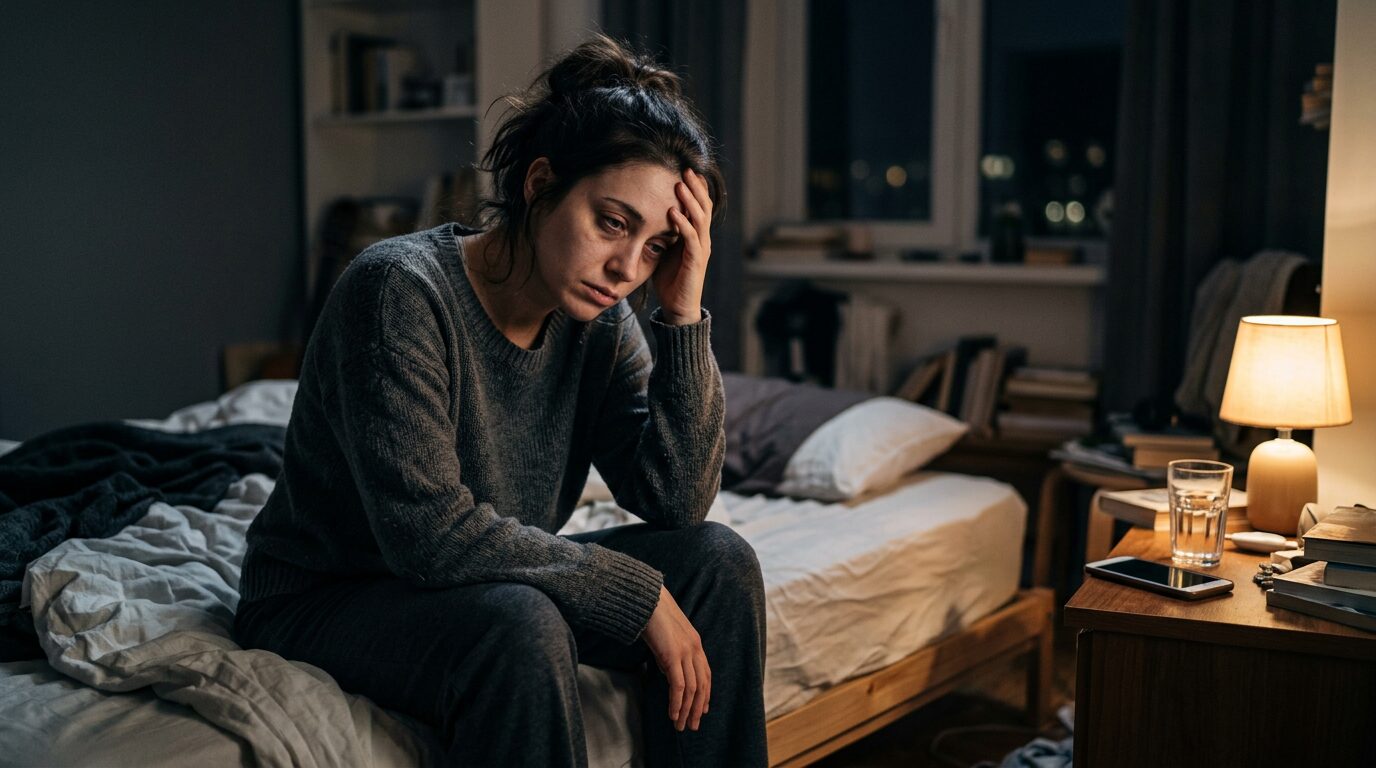
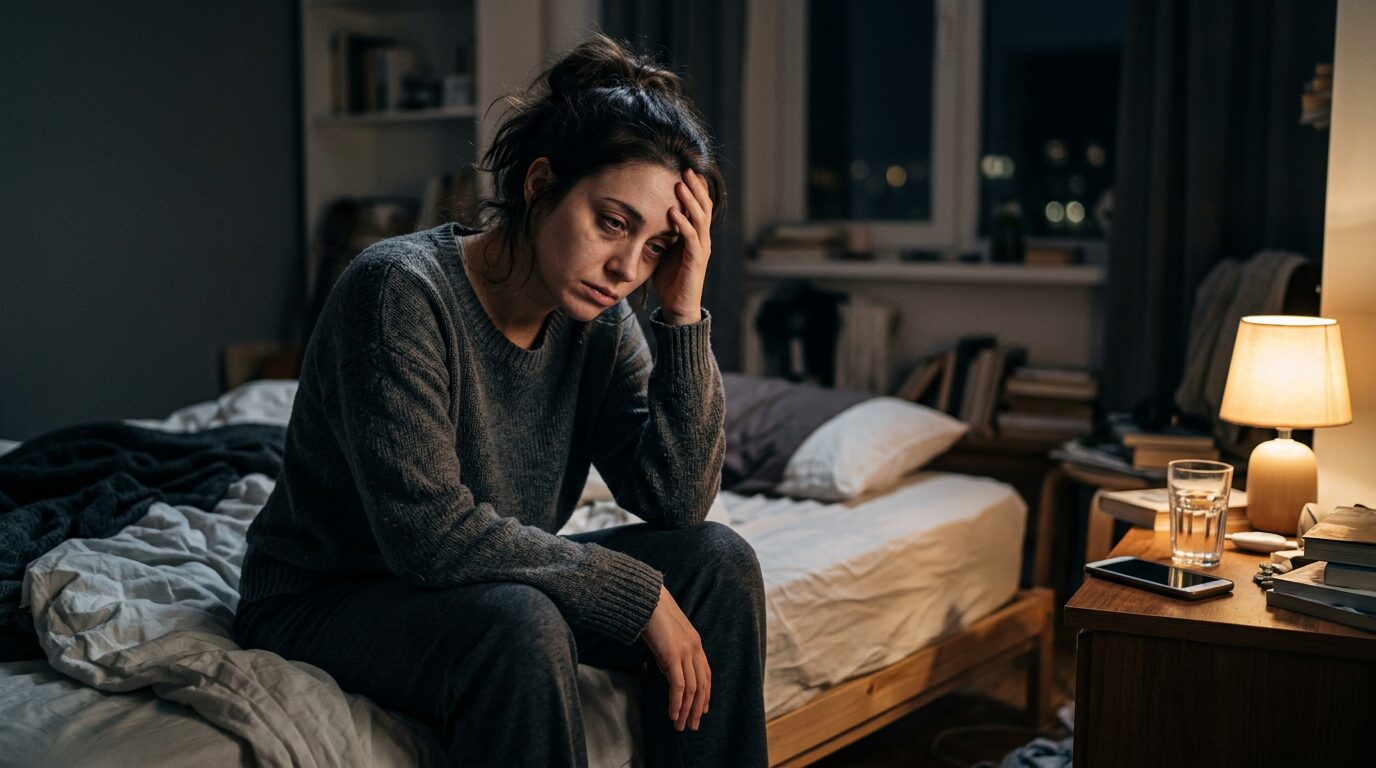
👋 Hey there, bestie! Let’s have a real talk, okay? We’ve all been there—scrolling through TikTok at 3:00 AM, thinking, “Just one more video,” or pulling an all-nighter because that project won’t finish itself. But let’s be honest, you’re running on fumes and a massive amount of caffeine, aren’t you? ☕ It feels like a badge of honor to be the “hustler” who sleeps four hours a night, but spoiler alert: your brain is screaming for mercy. By 2026, we should know better, right? Sleep isn’t just “time off”; it’s the ultimate recharge station for your mind. When you skip it, you’re basically trying to run a top-tier supercar on empty. 🏎️ Your mental health isn’t just a mood swing or a “bad day”—it’s a complex ecosystem, and chronic sleep deprivation is like throwing a grenade into it. Let’s dive deep into why catching those Z’s is the most legendary self-care hack of all time. 😴
Table of Contents
- Why Your Brain Is Begging for a Nap
- The Emotional Rollercoaster of Tiredness
- Anxiety and Sleep: The Ultimate Toxic Relationship
- Brain Fog and Cognitive Crash
- How to Reclaim Your Sleep Kingdom
- Sıkça Sorulan Sorular (FAQs)
🧠 Why Your Brain Is Begging for a Nap
💥 Did you know your brain actually has a cleaning crew that only works while you’re passed out? It’s called the glymphatic system, and it’s essentially the janitor service for your gray matter. When you stay awake, waste products like beta-amyloid—the junk linked to memory issues—start piling up. Imagine trying to work in an office that hasn’t been cleaned in a week; it’s chaotic, gross, and you can’t get anything done. That’s your brain after 24 hours of no sleep. 🤯
🚀 Scientists in 2026 are finding even more insane connections between deep sleep cycles and neural plasticity. Basically, your brain uses those REM cycles to wire together the new stuff you learned during the day. If you don’t sleep, you’re not locking in that new skill or information. You’re just… leaking memories. It’s like saving a file on your computer and then immediately unplugging it from the wall. 🔌 Don’t be that person!
🔥 Furthermore, your prefrontal cortex—the CEO of your brain responsible for decision-making and impulse control—basically takes a vacation when you’re sleep-deprived. Ever wonder why you made that weird text to your ex at 2:00 AM or bought something totally random online? That’s your executive function going offline. It’s not just a lack of willpower; it’s a biological glitch. 💸
Important: If you’re feeling consistently hopeless, anxious, or unable to function, please reach out to a mental health professional. Sleep is a piece of the puzzle, not a cure-all for clinical conditions. 🩺
🎢 The Emotional Rollercoaster of Tiredness
🌪️ Okay, kanka, let’s talk about those mood swings. Have you ever felt like you were ready to cry because you dropped your toast, or wanted to scream at your barista for getting your order wrong? That’s not you being “dramatic”; that’s your amygdala—the part of your brain that handles fight-or-flight responses—running completely unchecked. 🤬 When you’re well-rested, your brain can regulate those reactions. But when you’re sleep-deprived, the connection between your emotional center and your logic center gets frayed. It’s like trying to drive a car with a loose steering wheel—you’re all over the place! 🚗
✨ Your emotional intelligence and empathy also take a nosedive. Think about it: when you’re exhausted, it’s impossible to have the patience to understand someone else’s perspective. You become irritable, snapping at friends and family, and then you feel guilty, which leads to more stress and less sleep. It’s a vicious cycle that keeps you spinning. 🌀
💯 Research confirms that sleep loss amplifies negative emotions. In studies from 2026, participants who were sleep-deprived showed a significantly stronger reaction to “negative” stimuli—like angry faces or sad news—than those who had a solid eight hours. Your brain is literally programmed to interpret the world as a scarier, more hostile place when it’s tired. So, if you’re feeling like the world is out to get you, maybe the world is just fine, but your brain needs a reset button. 💤
| Feature | Well-Rested Brain | Sleep-Deprived Brain |
|---|---|---|
| Emotional Control | Calm and collected 🧘 | Explosive and reactive 🧨 |
| Memory Recall | Sharp and fast 🎯 | Blurry and sluggish 🌫️ |
| Stress Levels | Manageable 💪 | Through the roof 📈 |
| Social Battery | Fully charged 🔋 | Drained/Anti-social 👻 |
📉 Anxiety and Sleep: The Ultimate Toxic Relationship
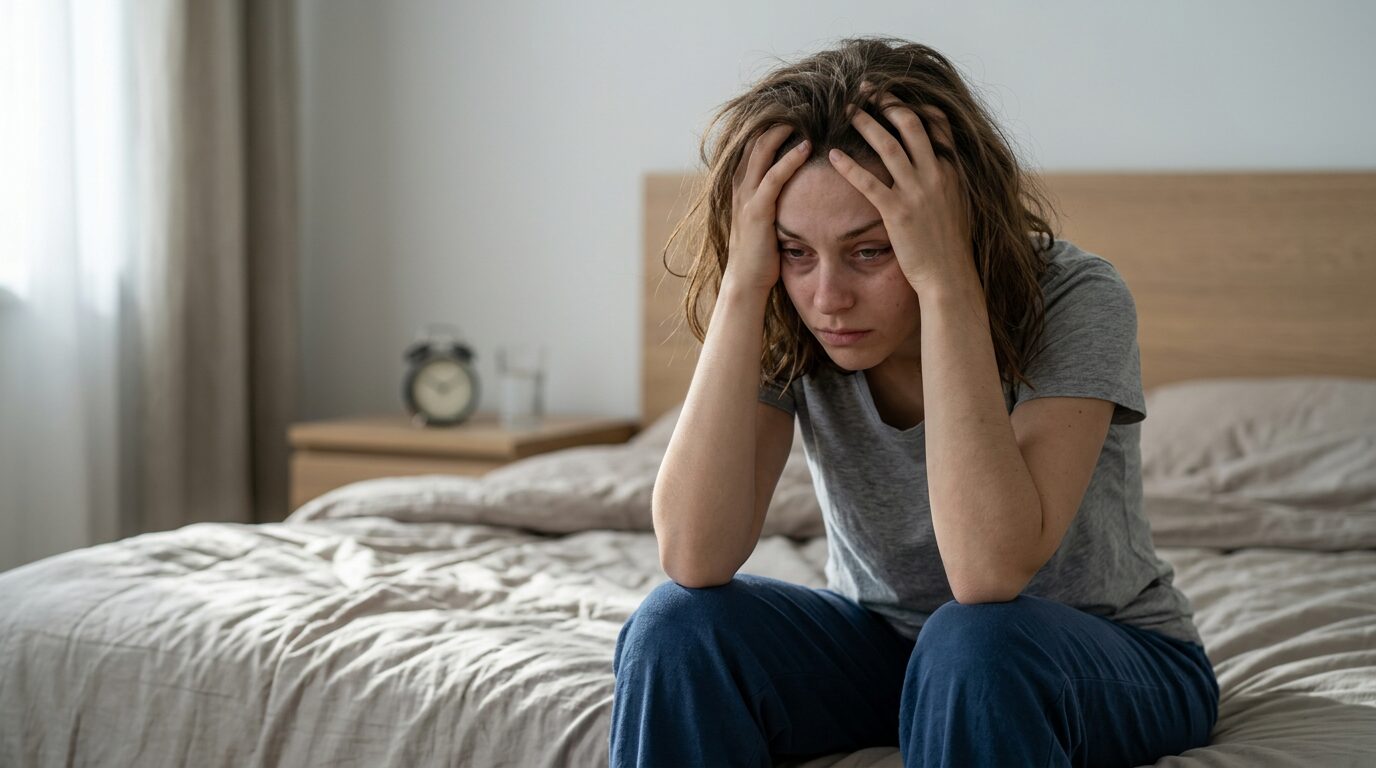
😱 Let’s address the elephant in the room: the “Sleep-Anxiety Loop.” You know the one—you’re stressed, so you can’t sleep. Because you can’t sleep, you become more stressed. It’s the worst kind of feedback loop, and it is a total vibe killer. 🚫 By 2026, we’ve seen clinical data showing that sleep deprivation is a precursor to anxiety disorders, not just a symptom. If you treat your sleep like a priority, you are actively insulating your mind against the heavy hitters of anxiety.
🤘 Think of your mind like a browser with 50 tabs open. You know how it slows down? That’s your brain trying to process anxiety when you haven’t rested. A good night’s sleep closes those background tabs, clears the cache, and lets you start the next day with a fresh browser. Without that, you’re just chugging along, waiting for the inevitable system crash. 💻
⚡️ Also, let’s talk about “Revenge Bedtime Procrastination.” You’re not doing anything important, but you refuse to go to bed because you feel like you haven’t had any “me time” all day. Sound familiar? We’ve all done it. But you’re trading your sanity for scrolling. The next time you feel that urge, ask yourself: is this reel of a golden retriever doing gymnastics worth the anxiety spike I’ll feel tomorrow? Usually, the answer is a hard no. 🐶
🧠 Brain Fog and Cognitive Crash
🧠 Remember that feeling when you walk into a room and forget why you went there? Or when you’re staring at an email and the words look like alien hieroglyphics? That’s classic brain fog, and it hits way harder when you’re low on rest. 🌫️ In 2026, focus is the most expensive currency, and sleep deprivation is stealing yours every single night.
🎯 Your ability to concentrate and pay attention is directly tied to the adenosine levels in your brain. Adenosine is the chemical that builds up during the day to make you feel sleepy. If you don’t clear it out with enough shut-eye, it sticks around, keeping you in a state of cognitive haze. You might think you’re “powering through,” but you’re actually making mistakes that will take twice as long to fix tomorrow. It’s just not efficient, bestie! 📉
🏆 Plus, creativity is the first thing to die when you don’t sleep. You know those “aha!” moments that come in the shower or right after a nap? That’s your subconscious connecting dots while you rest. If you never switch off, you’re literally killing your innovation. If you want to be the best at what you do, you need to sleep like you mean it. It’s not just for recovery; it’s for leveling up. 🌟
Important: If you’re experiencing severe memory lapses or extreme confusion, don’t ignore it. It could be a sign of something that needs a doctor’s attention. Stay safe and get checked out if you’re worried! 🩺
🛌 How to Reclaim Your Sleep Kingdom
👑 Okay, you’re convinced. You want better sleep. But how do you actually get it when the world is noisy and your phone is glued to your hand? Let’s break down some high-tier strategies for 2026. First off, get a “digital sunset.” An hour before bed, kill the blue light. Your brain thinks that phone screen is the sun, so it stops producing melatonin—the hormone that tells you it’s time to knock out. Put the phone in another room. No, seriously! 📱🚫
💪 Create a “sleep ritual” that you actually look forward to. Maybe it’s a warm shower, reading a physical book, or doing some light stretching. Make it a vibe. You want your brain to associate these activities with “shutting down time.” If you just jump from work to bed, your brain is still in “go mode.” You gotta signal that the shift is over. 🧘♀️
🙌 Temperature matters, too! Keep your bedroom cool. Like, “oops, I need a blanket” cool. Your body temperature naturally drops when you sleep, so a freezing room helps speed up the process. Also, consistency is king. Try to wake up and go to sleep at similar times, even on weekends. It keeps your circadian rhythm from going haywire. Your body loves a routine, even if you think you’re a “spontaneous” person. 🌡️
🤩 Finally, manage your caffeine intake. That 4:00 PM latte might feel like a life-saver, but caffeine has a half-life of about 5-6 hours. That means at 10:00 PM, half of that espresso is still partying in your system. Switch to decaf or herbal tea after lunch. You’ll be surprised at how much faster you fall asleep when your nervous system isn’t buzzing! ☕️➡️🍵
❓ Sıkça Sorulan Sorular (FAQs)
❓ Is it possible to “catch up” on sleep on the weekends?
Honestly? Not really, kanka. You can’t just bank sleep like money. While sleeping in on Saturday might make you feel a little better, it throws off your internal clock (the Sunday Scaries are real!). It’s way better to aim for consistent sleep every night rather than trying to binge-sleep on the weekends. 📅
❓ How much sleep do I actually need, realistically?
The magic number is usually between 7 and 9 hours for most adults. But listen to your body! If you wake up feeling like a zombie after 7 hours, try 8. Some people are genetically wired for less, but most of us are just running on chronic sleep debt. 🛌
❓ Why do I wake up in the middle of the night and can’t go back to sleep?
That’s often anxiety creeping in or a disruption in your sleep cycles. Try the 4-7-8 breathing technique (inhale for 4, hold for 7, exhale for 8). It forces your nervous system to calm down and signals to your brain that it’s safe to drift off again. 🌬️
❓ Does melatonin really work for everyone?
It’s a supplement, not a magic pill. Melatonin can help signal to your body that it’s time to wind down, but it’s not a sedative. It works best for jet lag or shifting schedules, not necessarily for treating chronic insomnia. Always chat with a pro before adding new supplements to your routine! 💊
❓ Is reading on my phone before bed really that bad?
Yes, sadly! Even with “Night Shift” mode on, the content you’re consuming (emails, news, social media drama) keeps your brain alert. The blue light is one thing, but the mental stimulation is the real enemy. Keep the phone out of reach if you want deep, quality rest. 🚫📱
❓ What if I have a super busy schedule and literally can’t get 8 hours?
Prioritize quality over quantity. Even if you only have 6 hours, make those 6 hours high-quality by having a dark, cool room and no phone usage. It’s better to have 6 hours of solid, uninterrupted sleep than 8 hours of tossing and turning while worrying about your to-do list. ⏳
❓ Will my sleep improve immediately if I start these habits?
It might take a few days for your body to adjust, so don’t give up after night one! Think of it like a workout; you don’t get shredded after one visit to the gym. Stay consistent with your new routine, and you’ll start feeling the mental clarity benefits within a week or two. Keep at it! 🚀
🎉 Look at you! You’re now armed with the knowledge to reclaim your mental health and start sleeping like a champion. Remember, sleep isn’t lazy; it’s essential fuel for the fire that is you. Go forth, get those hours, and crush tomorrow with that rested brain! You’ve got this! 💪✨